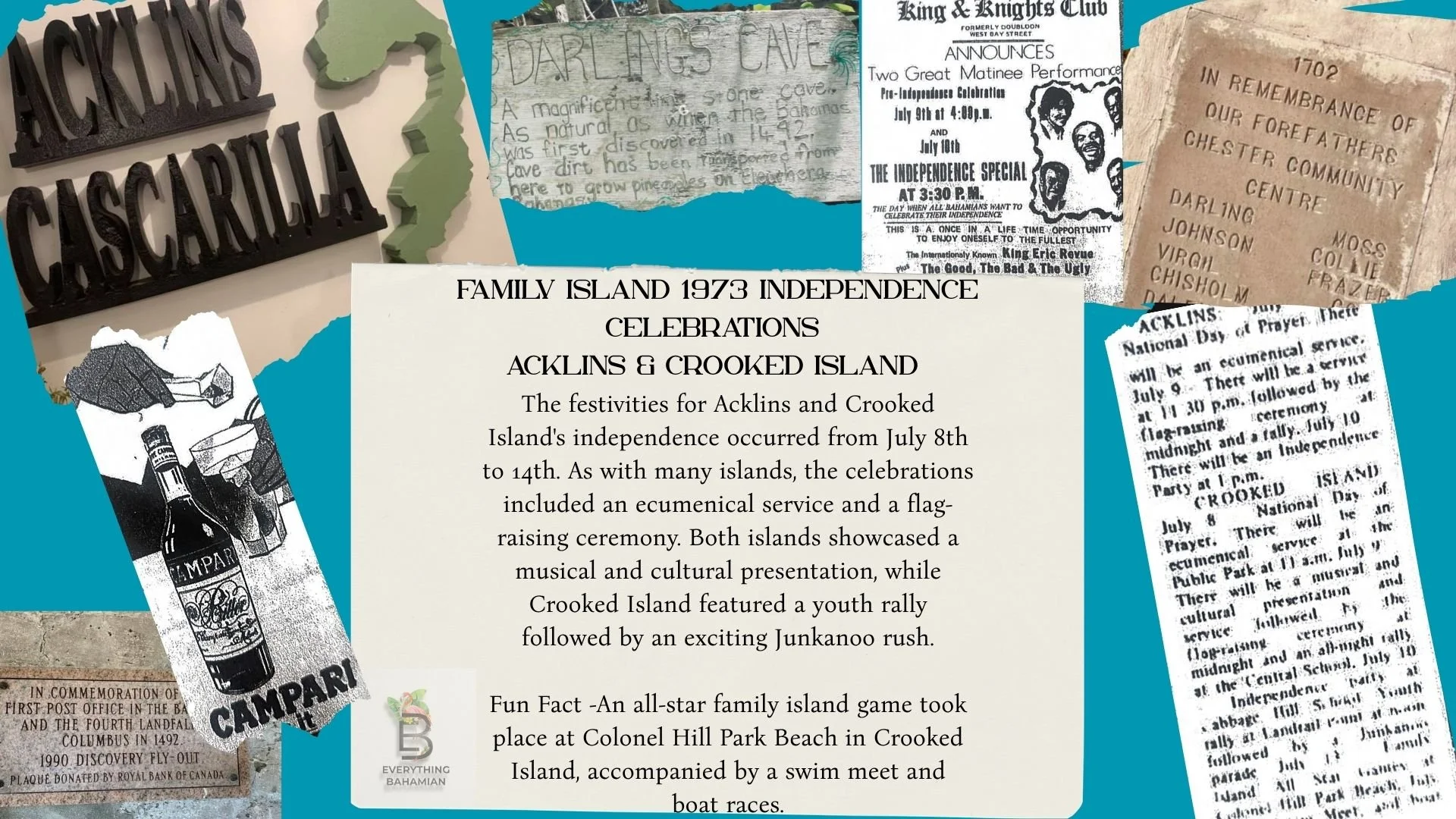
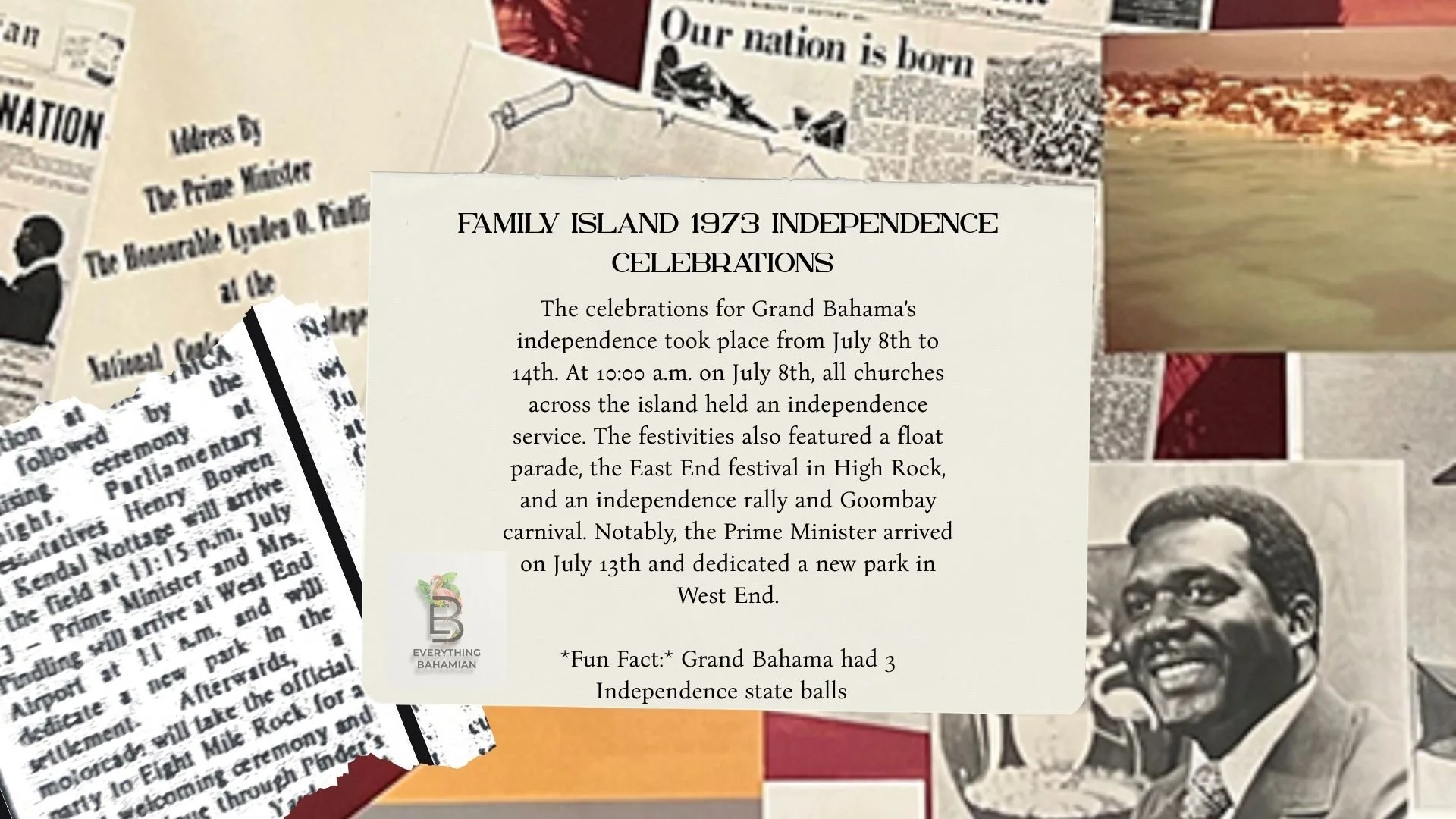
Family Island 1973 Independence Celebrations Inagua
Happy 53rd year of independence Bahamas!
Family Island 1973 Independence Celebrations Inagua
#Inagua #TheBahamas #BahamianHistory #ForwardUpwardOnwardTogether

Education -History- Culture
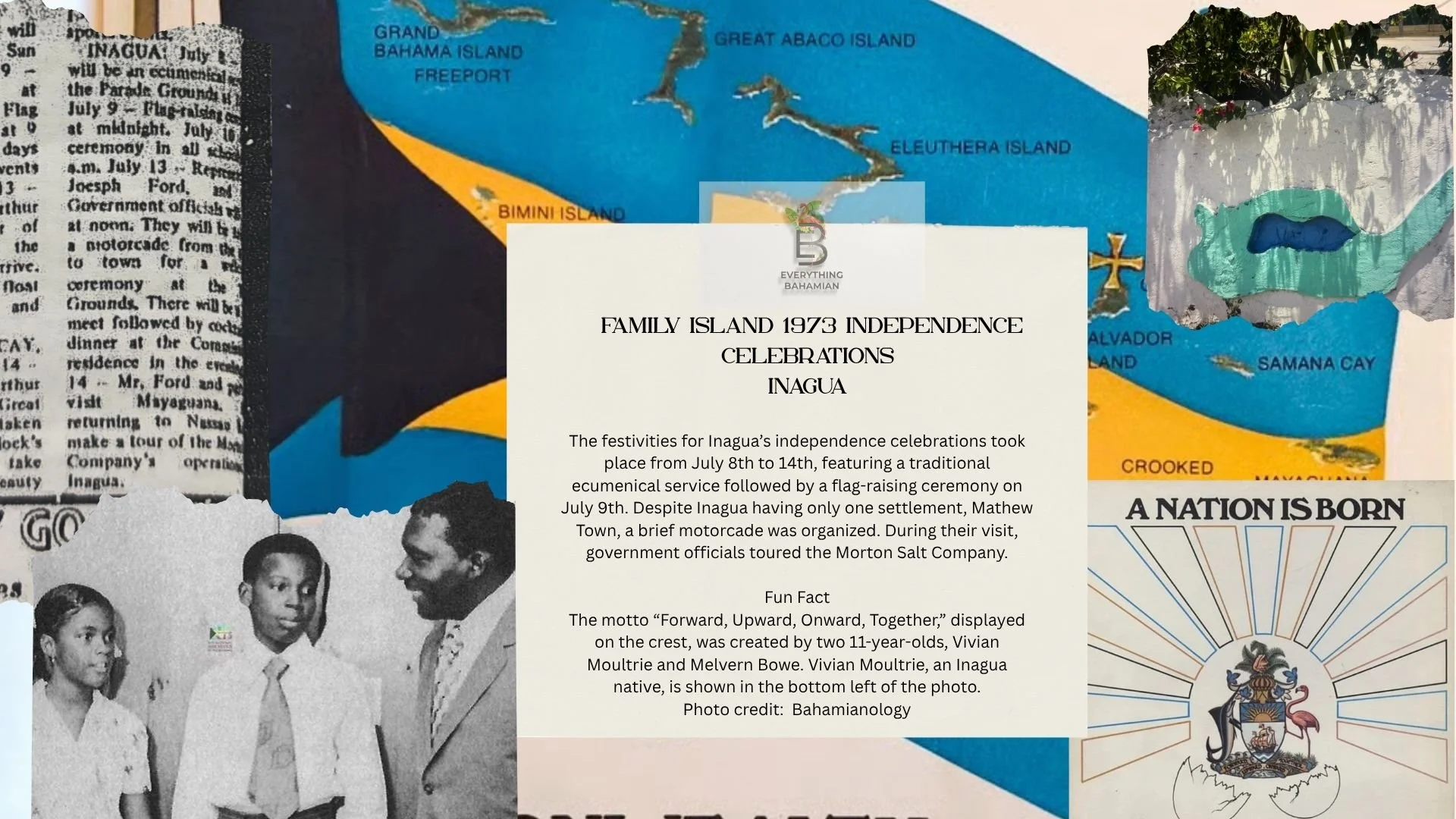
Happy 53rd year of independence Bahamas!
Family Island 1973 Independence Celebrations Inagua
#Inagua #TheBahamas #BahamianHistory #ForwardUpwardOnwardTogether
Happy 53rd independence anniversary!
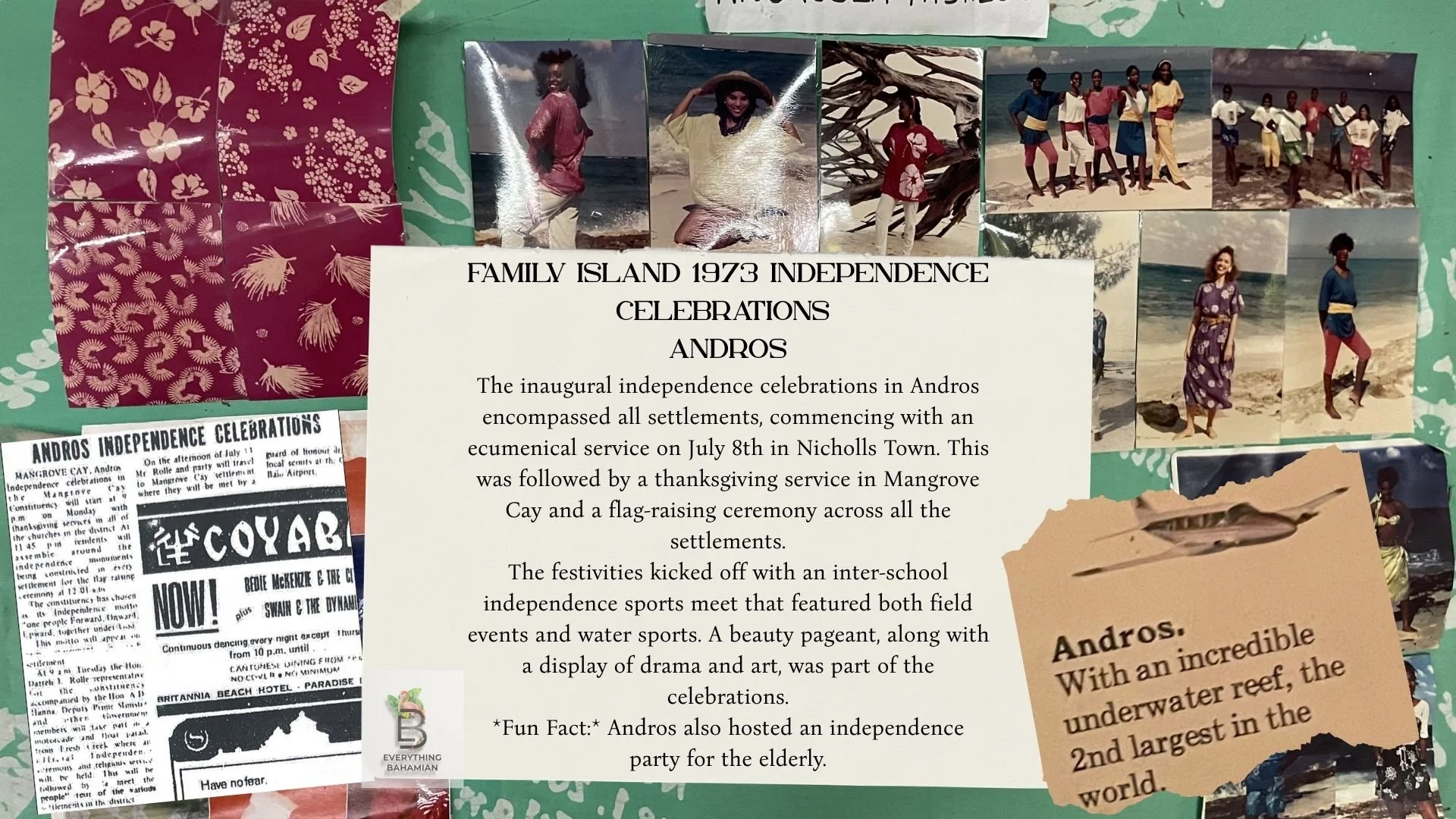
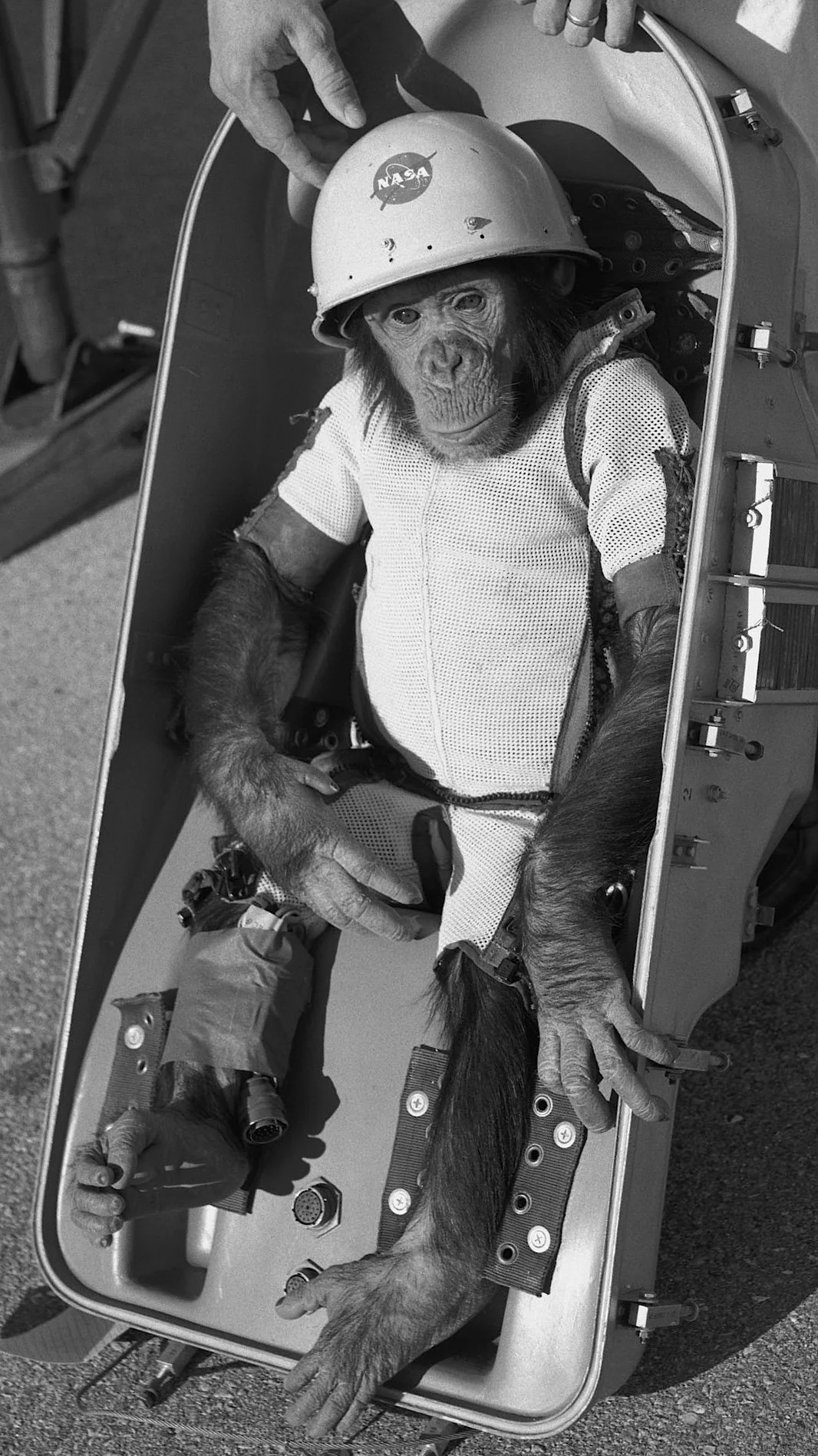
Photo credit-NASA
With recent SpaceX launches throughout The Bahamas, it’s important to note that our country has always been roped into our northern neighbor’s obsession with space and deep-sea (see AUTEC) exploration.
As early as the late 1950’s Mayaguana was used as a tracking base for the Thor-Able Missile program that tested heat shields and early space photography.
The missile was launched from Cape Canaveral, Florida and the data capsule containing the camera was recovered on February 16th 1960 on a beach in Mayaguana. This camera was the first to provide pictures of the Earth's surface from outer space
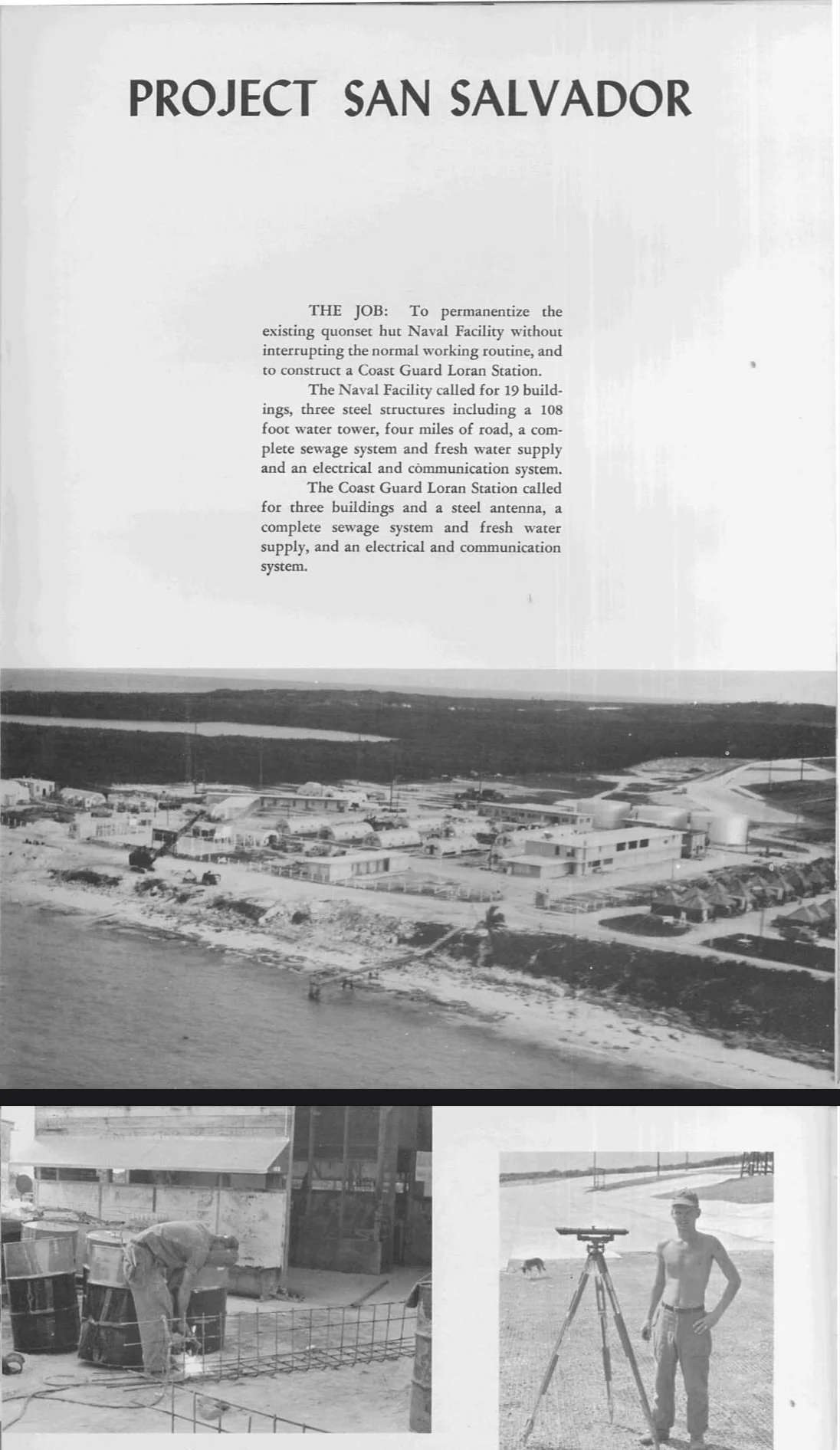
San Salvador was also used as a long-range navigation station during the early 1950’s to the late 1960’s to monitor missiles fired and to monitor submarine activity.
Below Photo retrieved from the Naval Mobile Construction Battalion document.
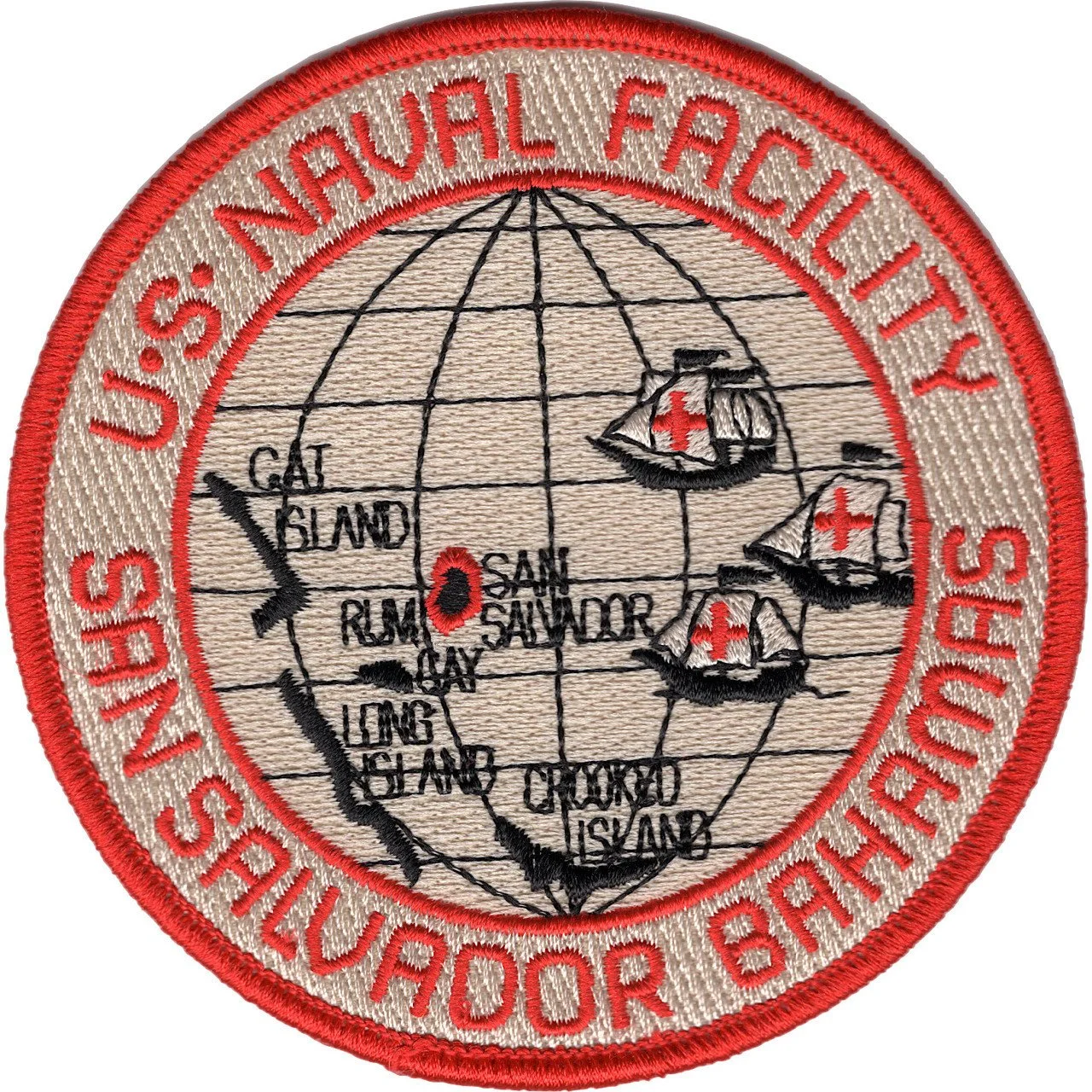
U.S Naval Facility San Salvador, The Bahamas badge.
The U.S. Navy also operated a Cold War-era base, NAVFAC Eleuthera, near Governor’s Harbour, from 1957 to 1980
According to www.grandbahamamuseum.org
During the Cold War in 1950, the U.S. was granted the right to install tracking stations for guided missiles (and later the Apollo Space missions) in The Bahamas by the British government. The missile-tracking system was designed to advance the Air Force’s understanding and development of push-button warfare.
The “down range” stations began with the Grand Bahama base, built in 1951 on a 3,500-acre site, which provided launch support from 1954 to 1987.
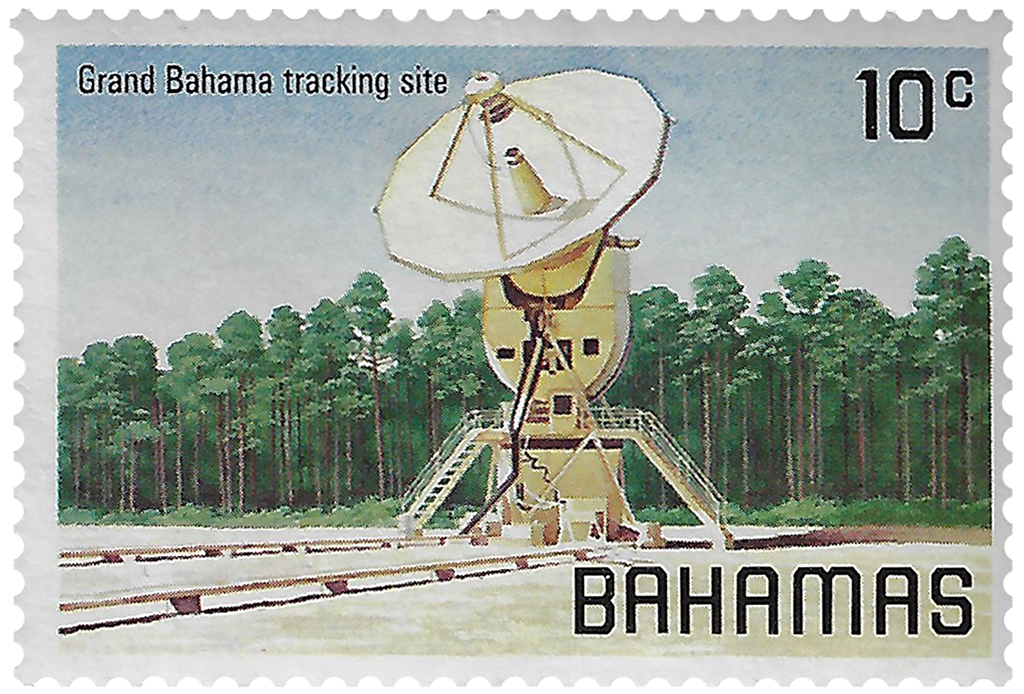
Photo credit- Grand Bahama Museum
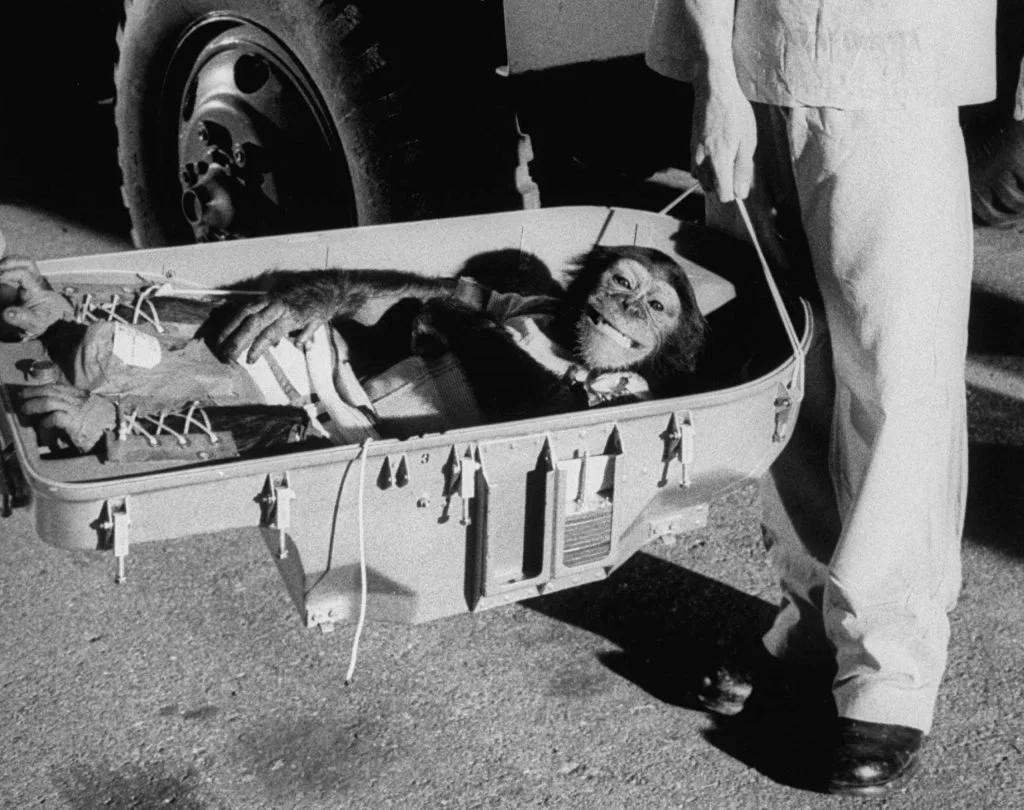
On January 31st 1961, NASA would send the first great ape into space in an effort to test whether a living being could survive and function in space.Ham, who was originally called subject 65 underwent intense training for about 2 years before takeoff.
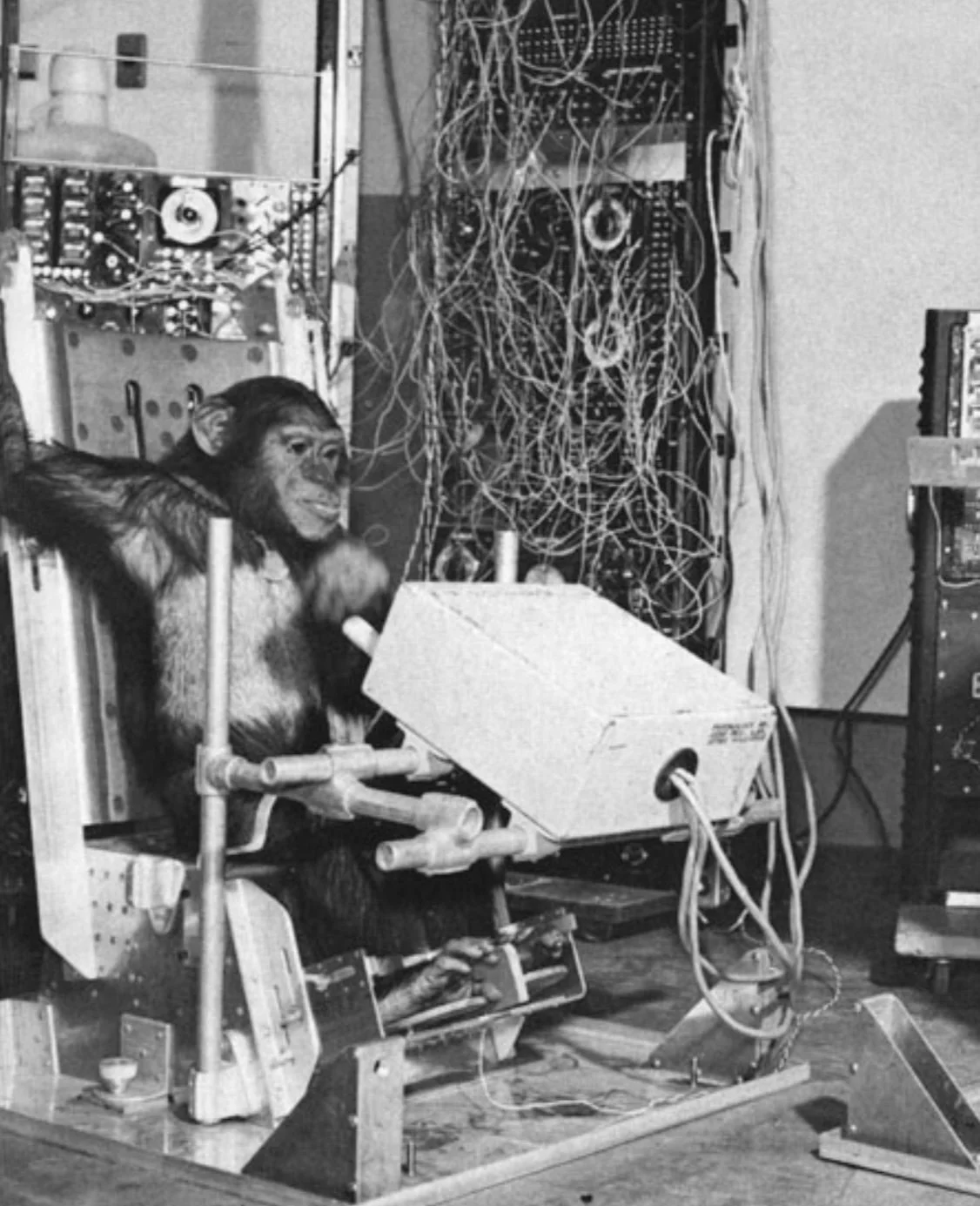
Photo credit-NASA
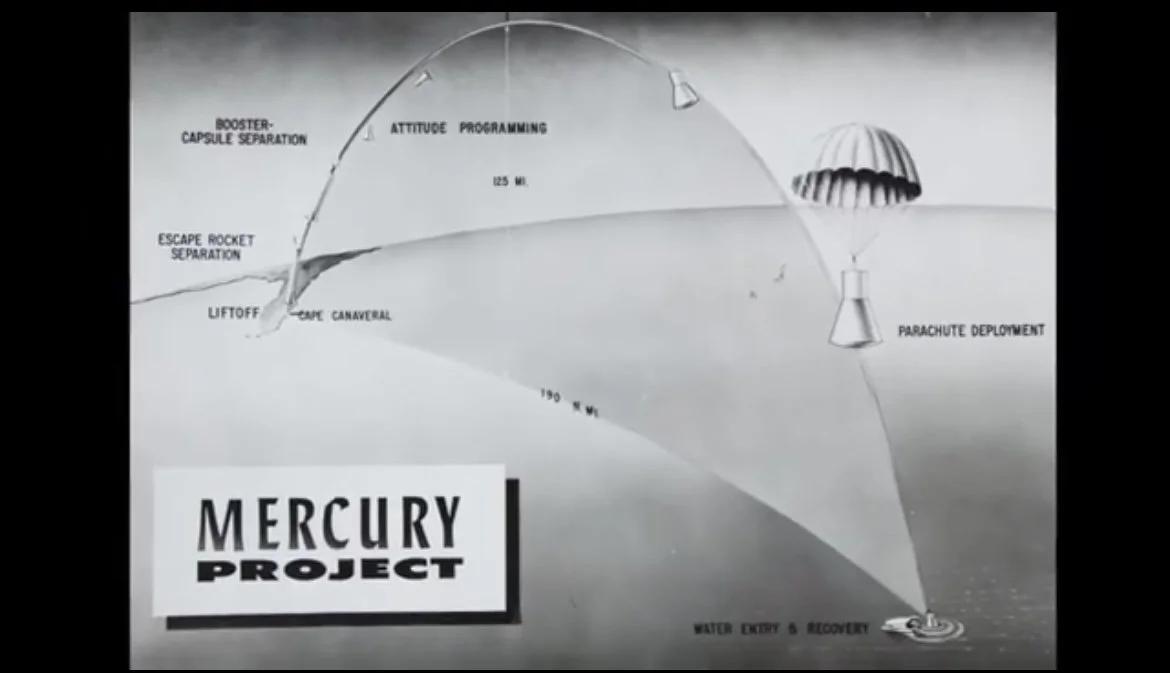
At 11:54 a.m. the rocket launched into space and what started as a smooth trajectory quickly began to show problems. A faulty valve began to inject too much liquid oxygen into the engine which resulted in excessive thrust that accelerated Ham faster than expected. The mission was planned to reach an altitude of 115 miles and land 290 miles downrange, the space craft actually reached an altitude of 157 miles and landed 422 miles downrange.
Ham’s capsule splashed down into the rough seas far beyond the end of the Atlantic missile range. Shortly after NASA reported that the floating capsule would be rescued within three hours. By 2:52 p.m. The capsule was recovered by a helicopter and quickly transported to the USS Donner at 3:38 p.m.
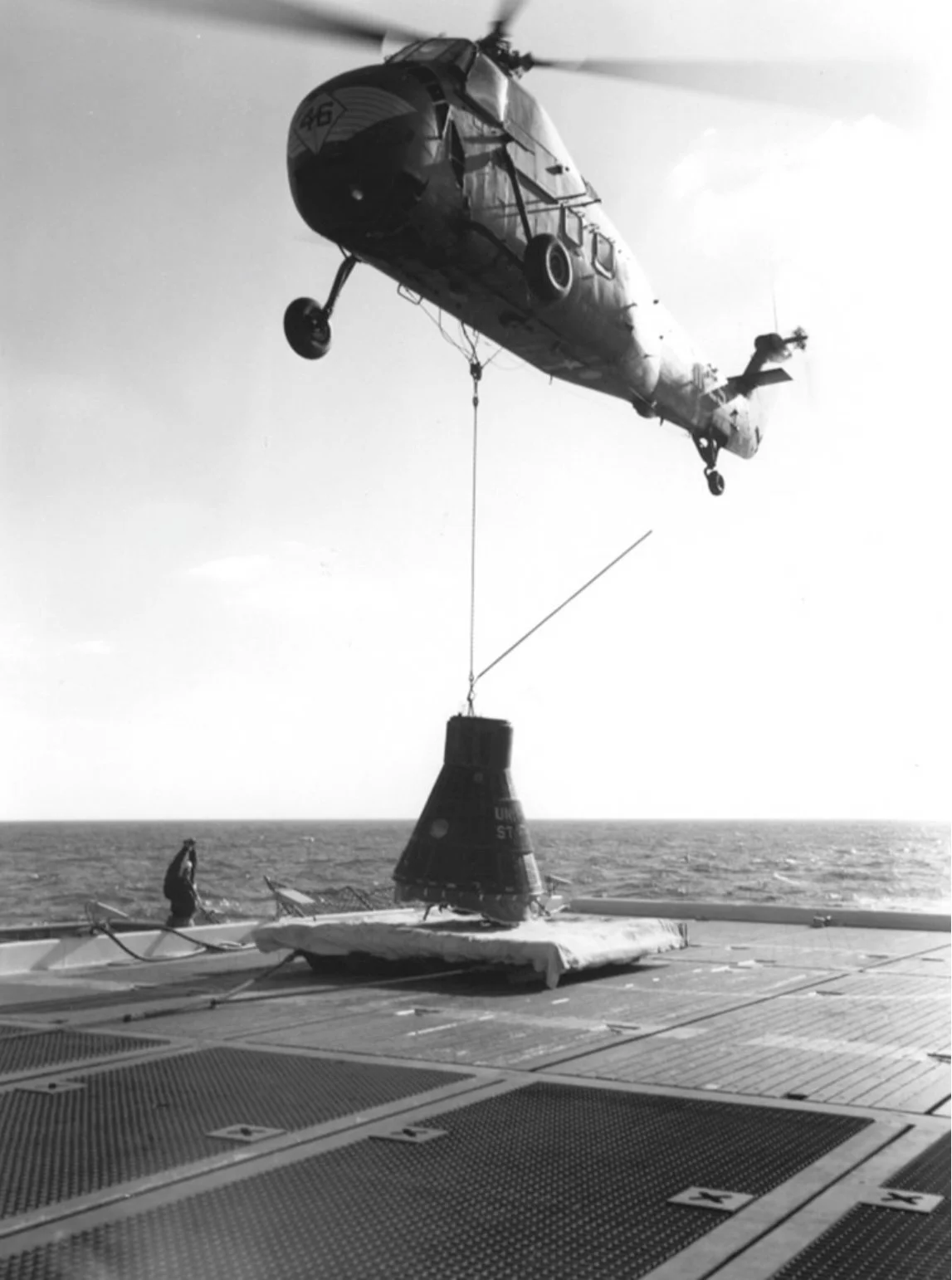
Photo credit- U.S. Navy
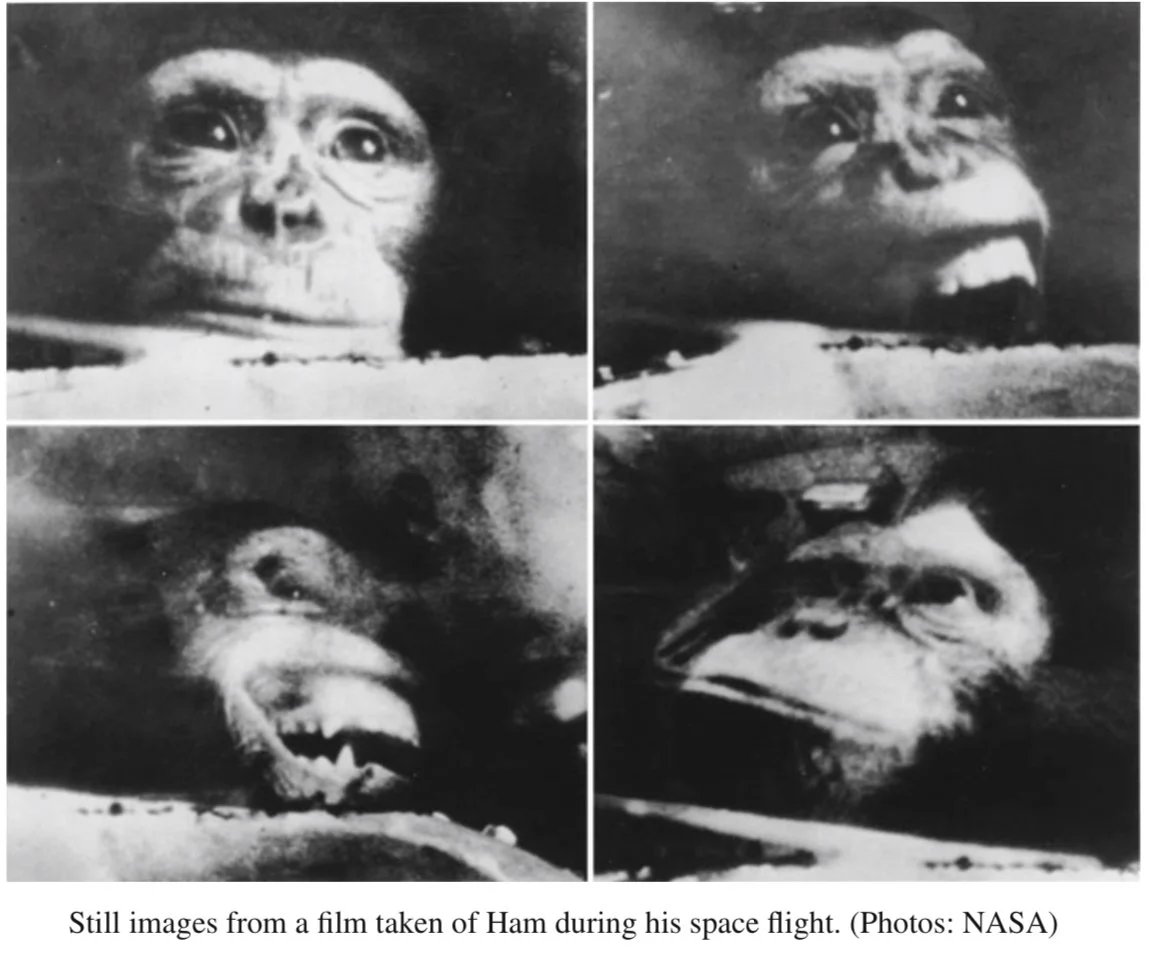
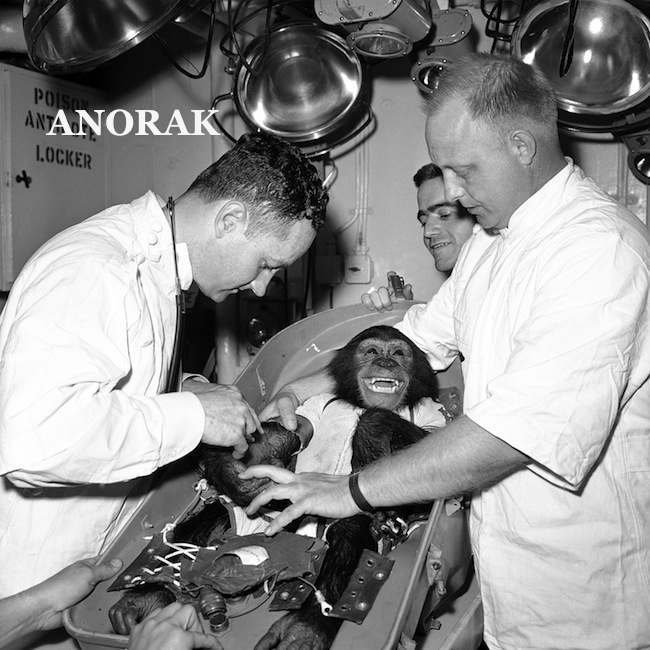
Unsure of what state Ham was in they finally opened the capsule…
Video retrieved from “Ham the first astro chimp” documentary
Ham became the first living being to return from space alive. According to the book “Freedom 7: The Historic Flight of Alan B. Shepard” “Later, with Benson sleeping in an adjoining stateroom, Han spent the night in the commodore's quarters as the ship steamed across a moonlight ocean for Grand Bahama Island”
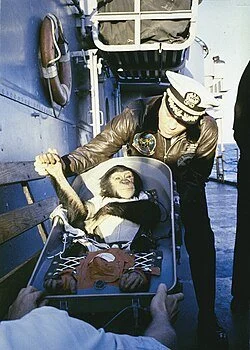
Photo credit- NASA
For further medical attention Ham was loaded back onto the helicopter and transferred to a forward medical facility on Grand Bahama.
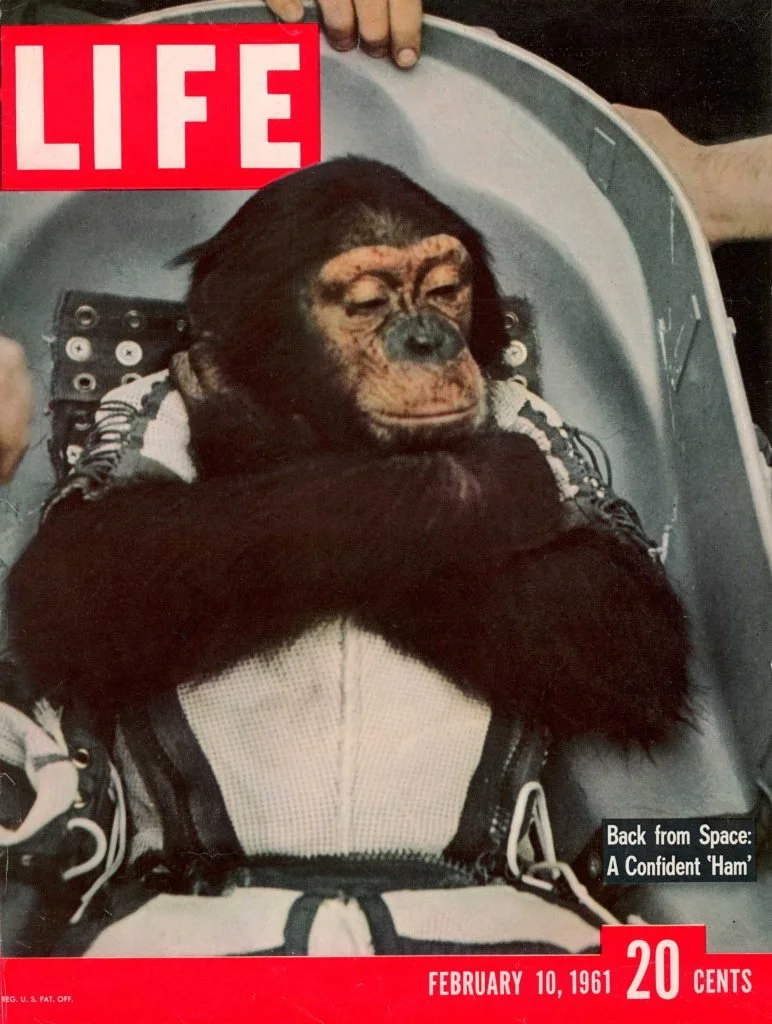
Ham was quickly thrust into the limelight being featured in magazines and newspapers
According to Dorcas Bowler in her article on the Grand Bahama East End Missile Library in 1995 “Father Grant, an Anglican priest from High Rock suggested the vacant telecommunication building on the main highway be used for a library” The vacant telecommunication building on the former missile base was transformed into a library that salutes Ham’s landing near the site
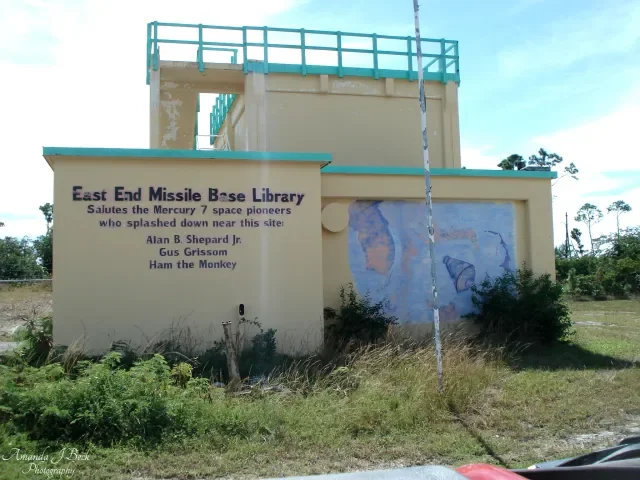
Photo credit- Amanda Beck photography
Ham became the library’s mascot, and the East End Missile Base Library would go on to annually celebrate “Ham day” Bowler states that “The first Ham Day was held at the Freetown Primary School in January 1998. One goal of the Library’s Board of Directors was to preserve the historic significance of the Missile Base and the part The Bahamas (Grand Bahama Island in particular) played in the United States space program. For this reason, the Board chose to select as its annual fund-raising celebration the anniversary of the chimpanzee ham’s flight into space.”
Happy 52nd anniversary to my beautiful country!
With over 50 years of musical expression in our independent nation, we have created, experimented and expanded within multiple genres. Our storytelling abilities, married with a knack for finding the right sound, make us incredibly talented in the music arena.
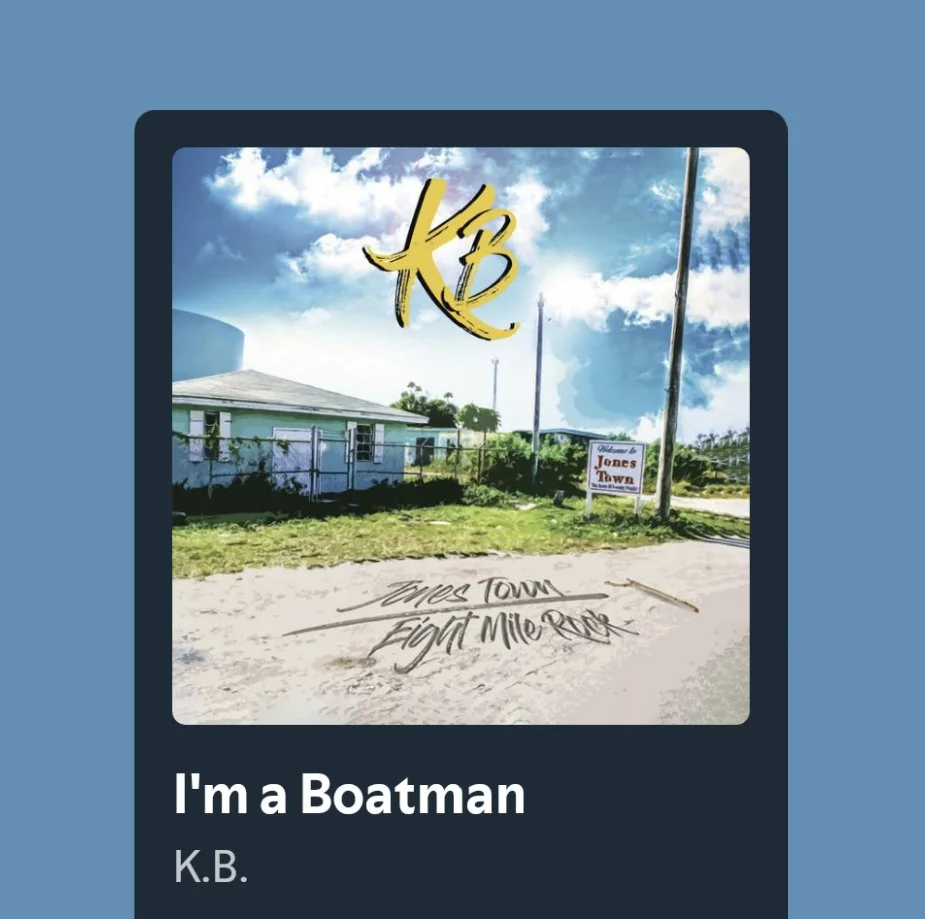
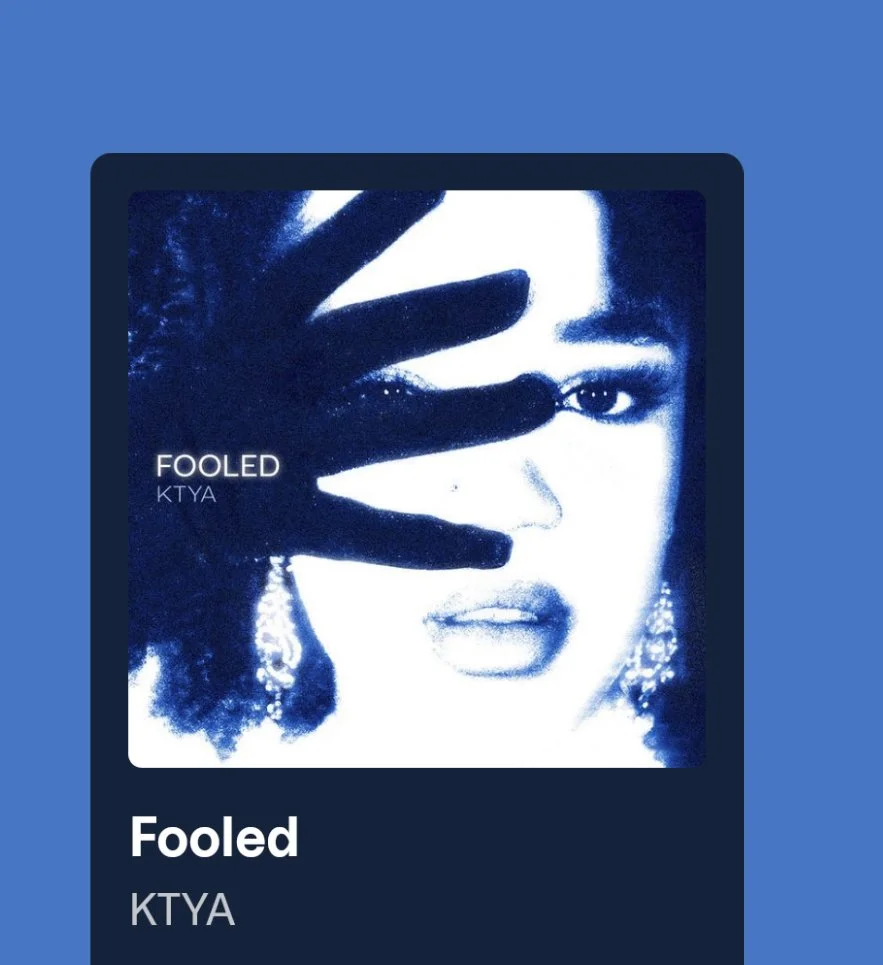
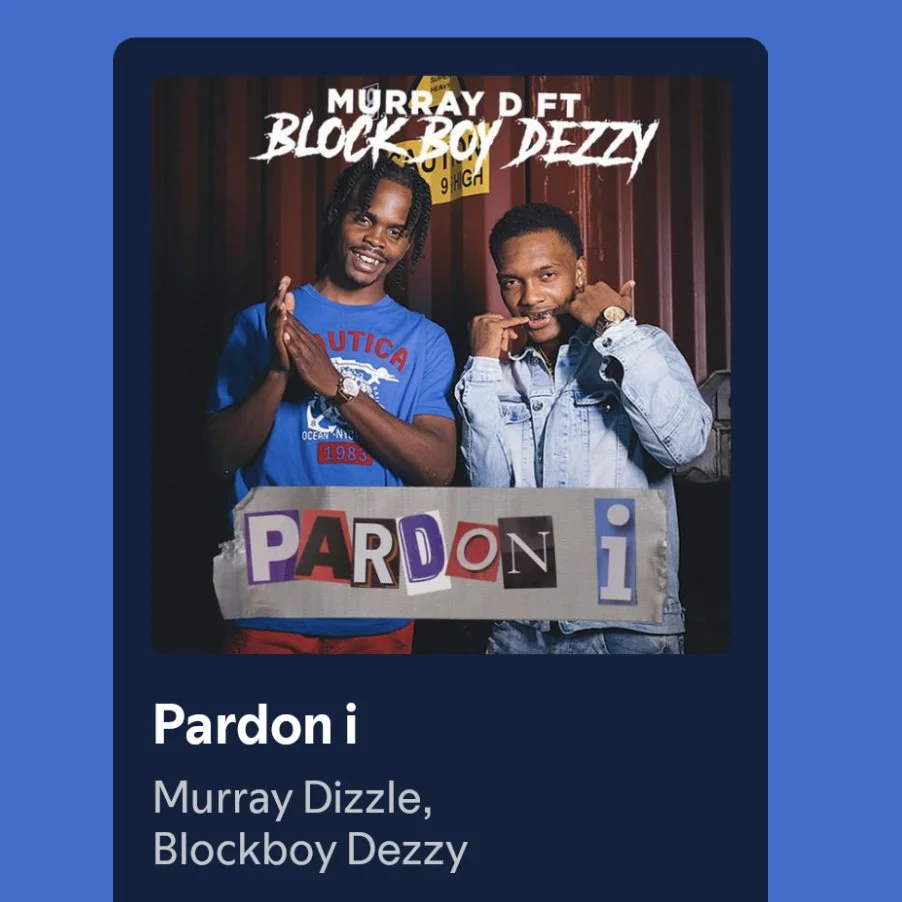
Everything Bahamian’s July 10th, 2025 top 10
Sketch Carey ft Mdeez- Wine For Your Man
KTYA- Fooled
Rik Carey - What Ya Say Junkanoo Remix
Float- DMac
K.B.- I’m a boatman
Sketch Carey-My candidate
Twindem, Sleepy Lexx, JudahThaLion- Don’t Fuss
Nishie L.S.-Loose Me
Shine242-Feel Like Winin’
Murray Dizzle ft BlockBoy Dezzy- Pardon I


Celebrating 52 years of Bahamian Music- the 2000s
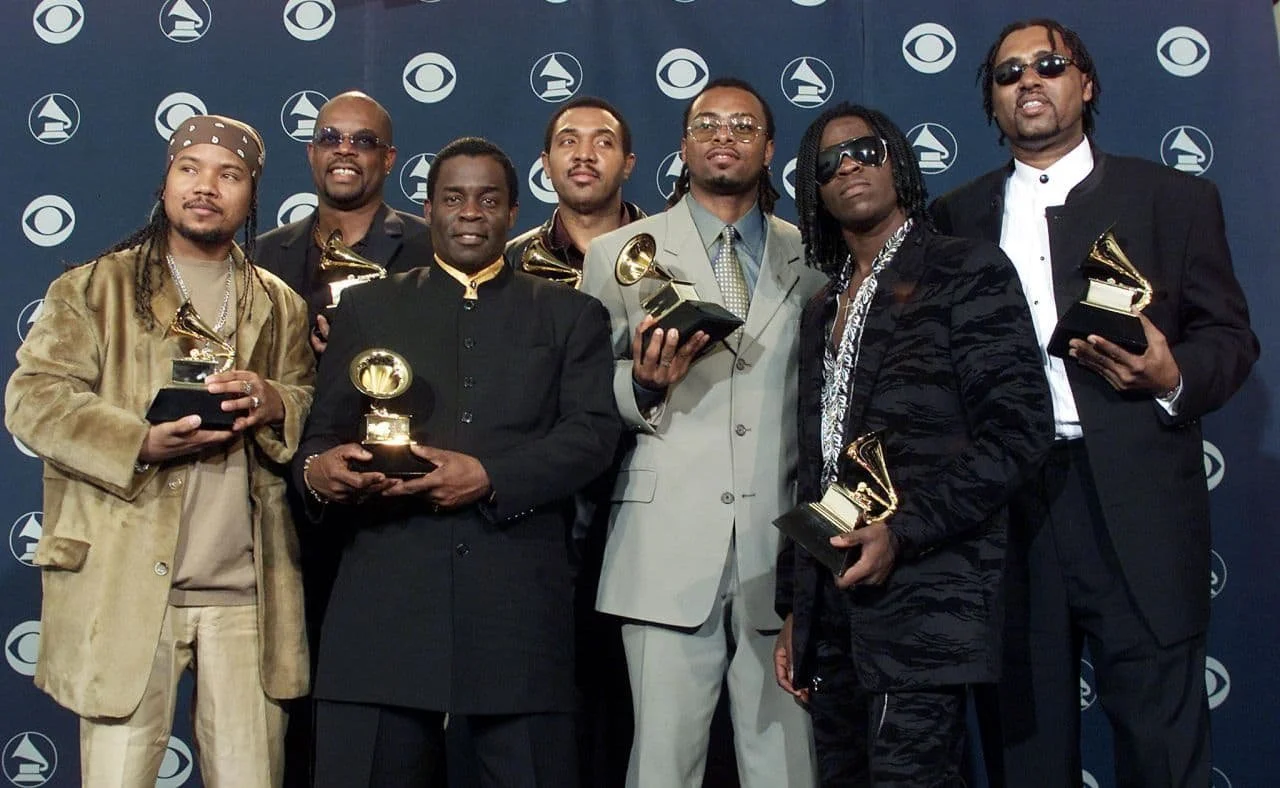
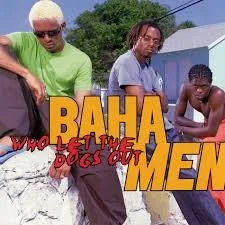
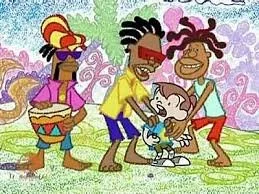
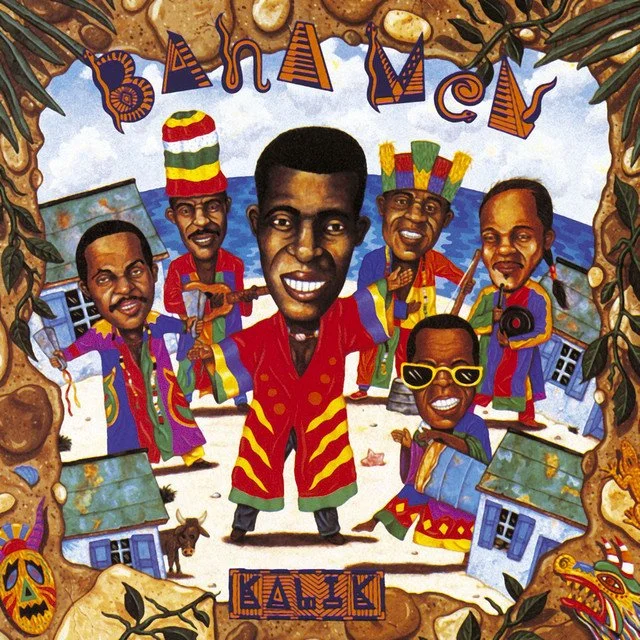
The New Millennium brought new, fresh music and huge commercial success to one group in particular, Baha Men. Their album, "Who Let The Dogs Out," was released in 2000 and was everywhere! The Baha Men's version, a remake, won a Grammy in 2001, peaked at number 2 on the UK Singles Chart, and went on to become the fourth biggest-selling single of 2000. The song's success was palpable; dog movies were never the same 😂. The group performed the theme song for the Disney series "Stanley."
"Coconut" for the Nickelodeon series "ChalkZone" and remade Lilo & Stitch's "Hawaiian Roller Coaster Ride" to "Bahama Roller Coaster Ride," which was featured on "Disneymania 4."
Everything Bahamian's top 10 for the 2000s
Geno D- Gal if I had you
KB- Hard Heel Gal
Avvy -Ghost Move
Ira Storr- Look What Ya Could Get
Baha Men- Bahama Roller Coaster Ride
Ronnie Butler & Sweet Emily- Oooh What You Do To Me
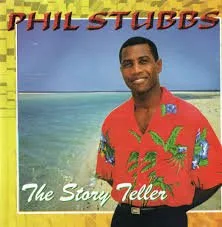
Phil Stubbs- We Conch
Phil Stubbs- Bonefish Folley
Baha Men- Who Let The Dogs Out
Sketch Carey- My Candidate
Celebrating 52 years of Bahamian music
the 90s
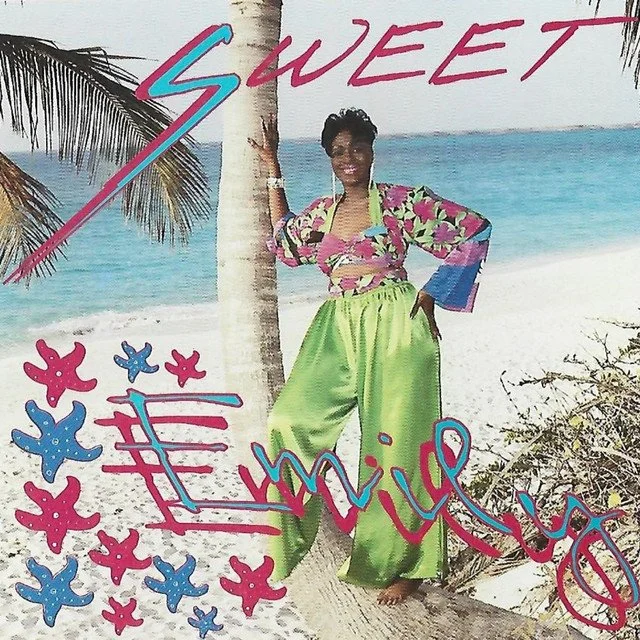
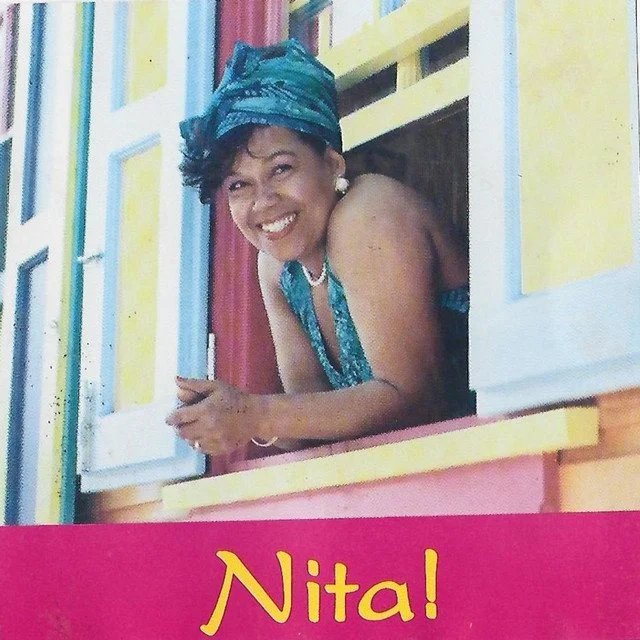
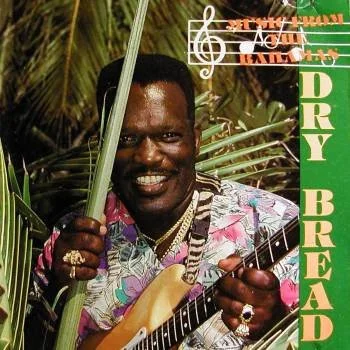
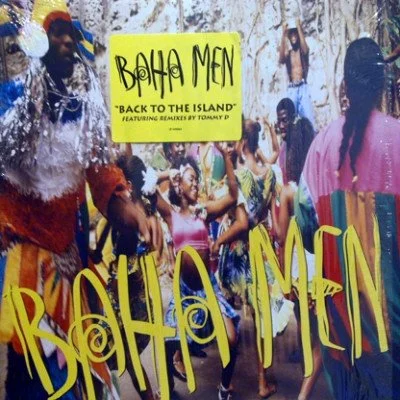
The 90s were such a fun time in Bahamian music! The colours were bright, the costumes island chic, and you were almost always sure to hear one of your favourite Bahamian hits on The Native Show. The island aesthetic was in and was even displayed on most album covers (floral and fruit shirt don’t care who wear it!) One thing was for sure, the sound was undeniably and authentically Bahamian 🇧🇸
Everything Bahamian’s top 5 from The 90’s
Baha men- Back to the islands
Nita - The Good Lord
Dry bread -Bahamian music
Sweet Emily - why ya bodder me
De centre -Funky D
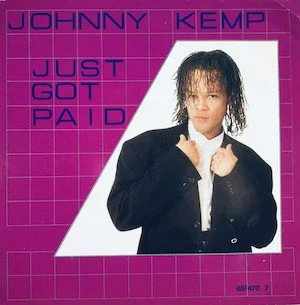
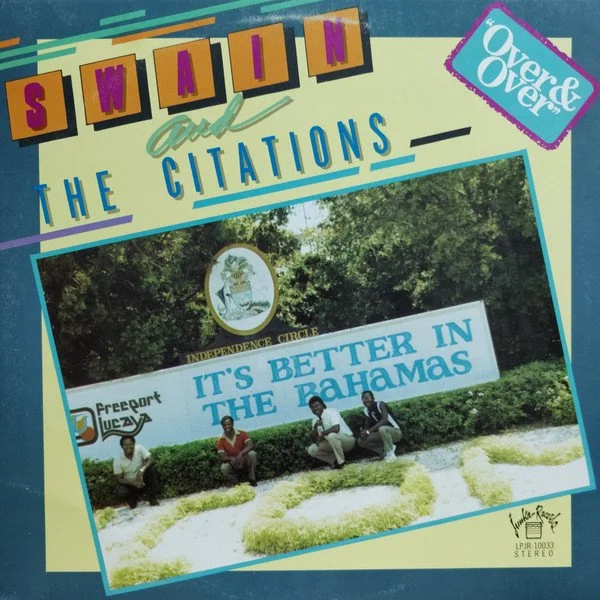
The decade following The Bahamas' independence in 1973 marked a vibrant period of cultural fusion in the music realm. Bahamian artists began experimenting with a blend of pop, R&B, and Junkanoo, creating a unique sound that resonated both locally and internationally. Elements of what some Bahamians might consider a "foreign sound" became increasingly popular with artists like Johnny Kemp, whose “Just Got Paid” single received a Grammy nomination, rose to number 1 on the U.S. R&B and dance charts, and number 10 on the Billboard Hot 100. As the sound changed, one thing that can be appreciated is that Bahamian artists continued to experiment with Junkanoo and Calypso in songs like “Get Involved” by Dr. Offfff and Darling by High Voltage
Everything Bahamian's top 5 for the 80s
High Voltage- Darling
Johnny Kemp-Just Got Paid
Exuma- Rude Boy
Dr. Offfff- Get Involved
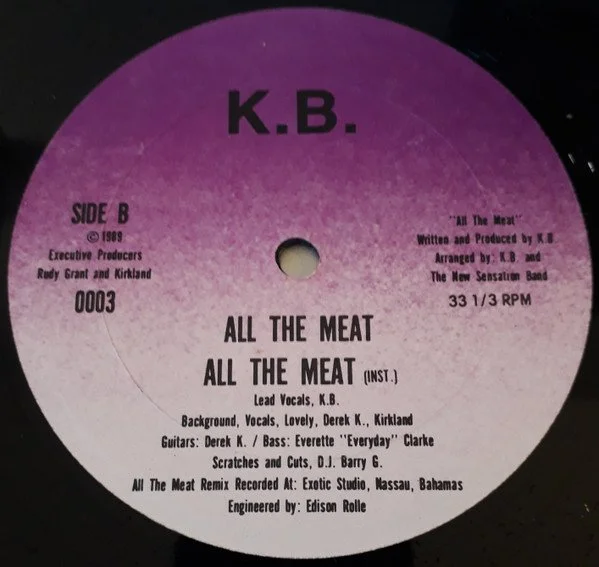
K.B.- All The Meat


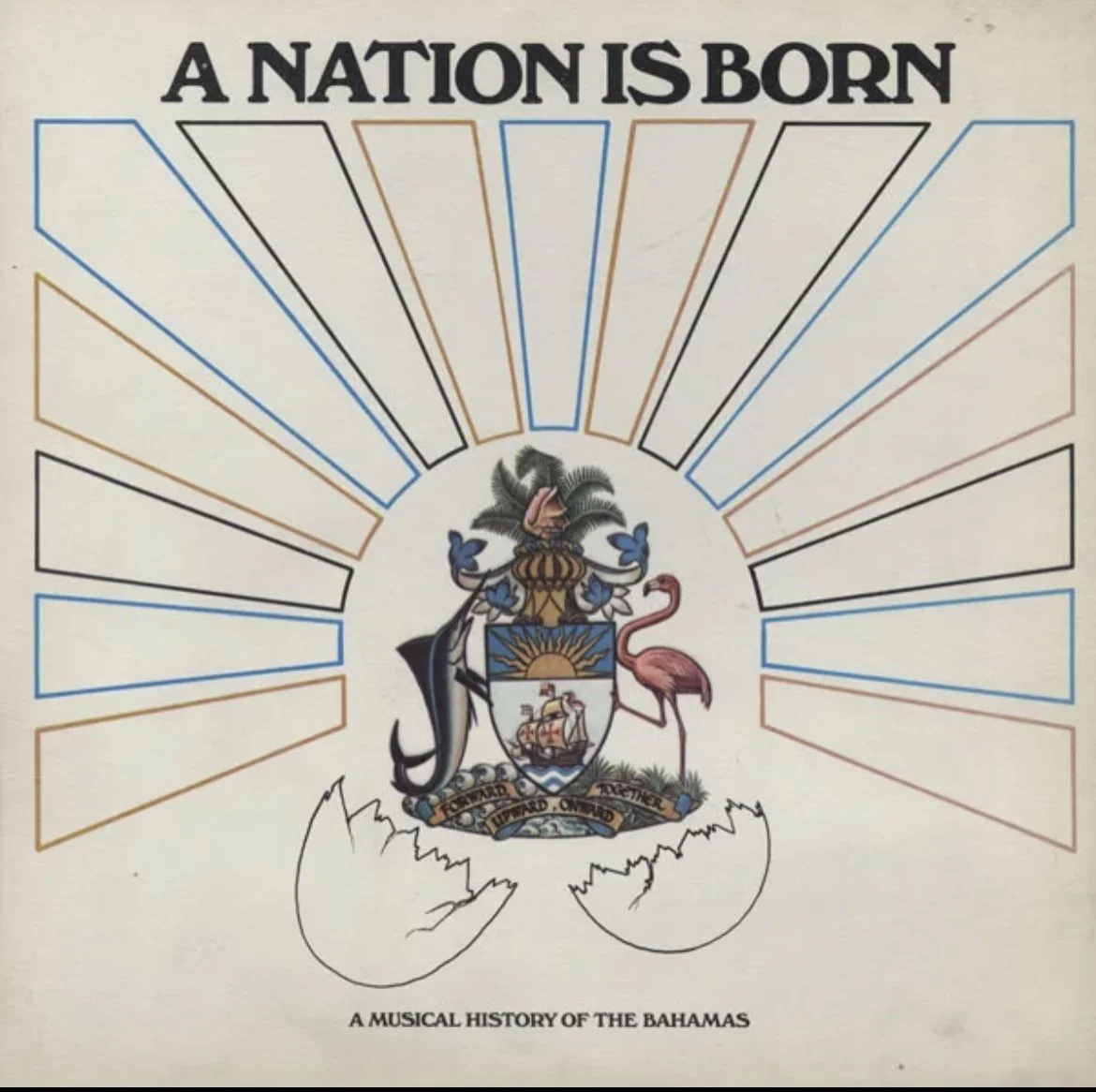
Celebrating 52 years of Bahamian music
The 70’s
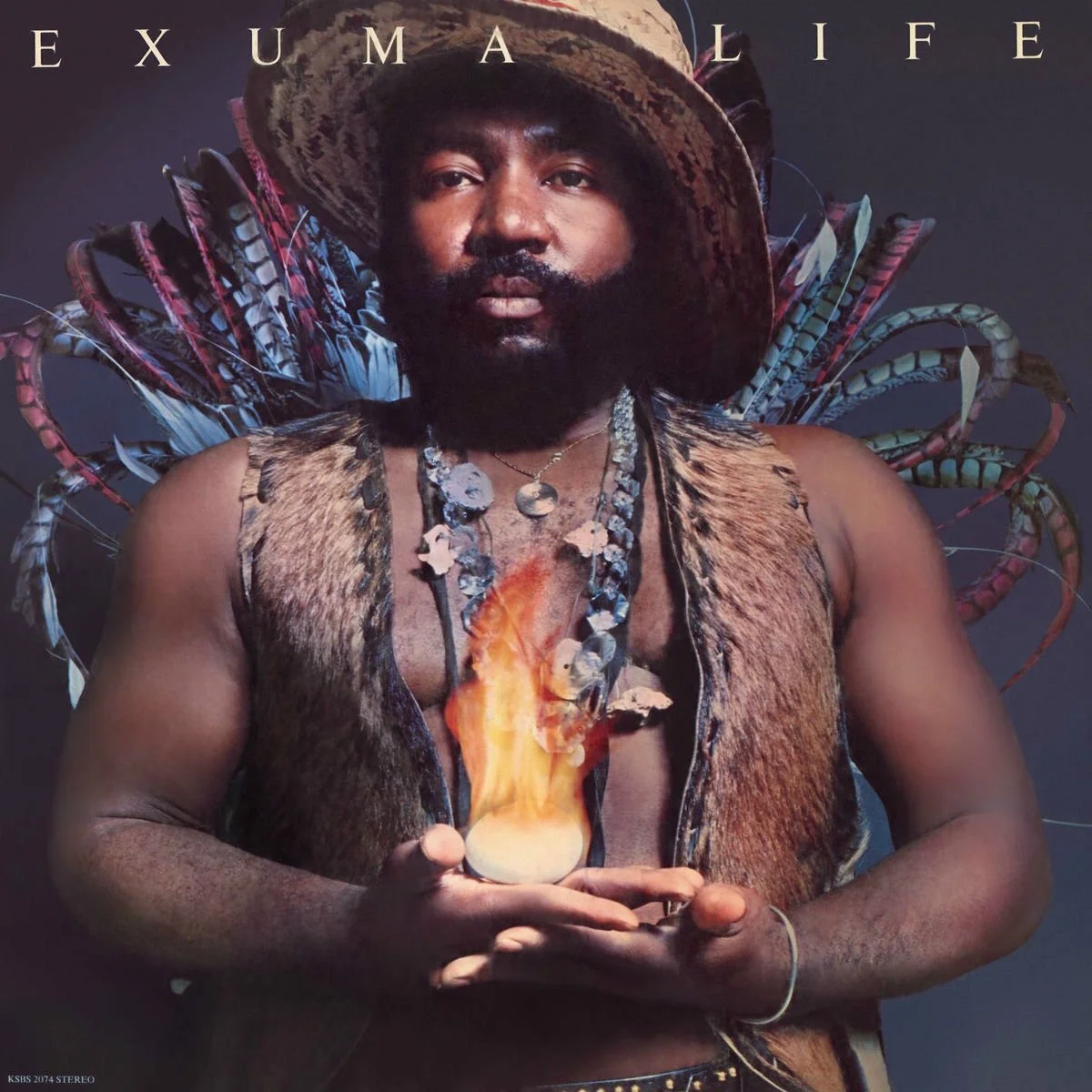
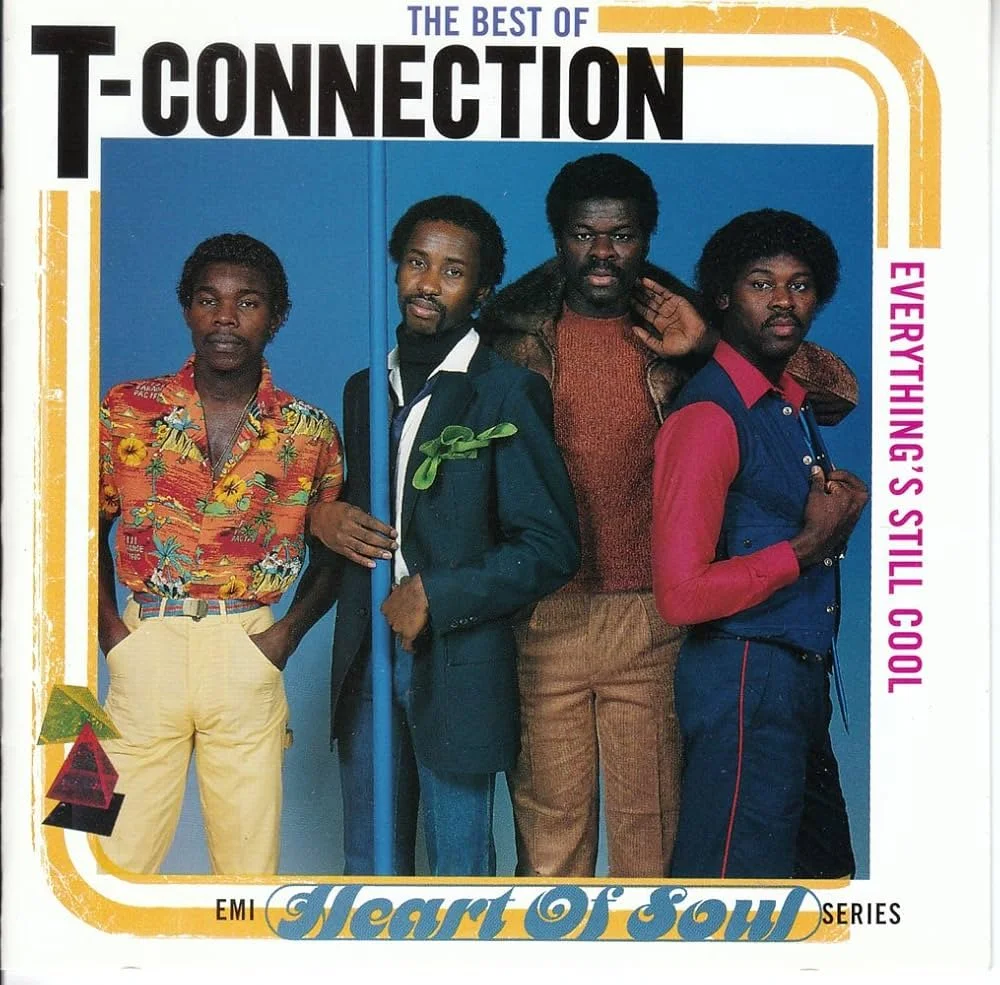
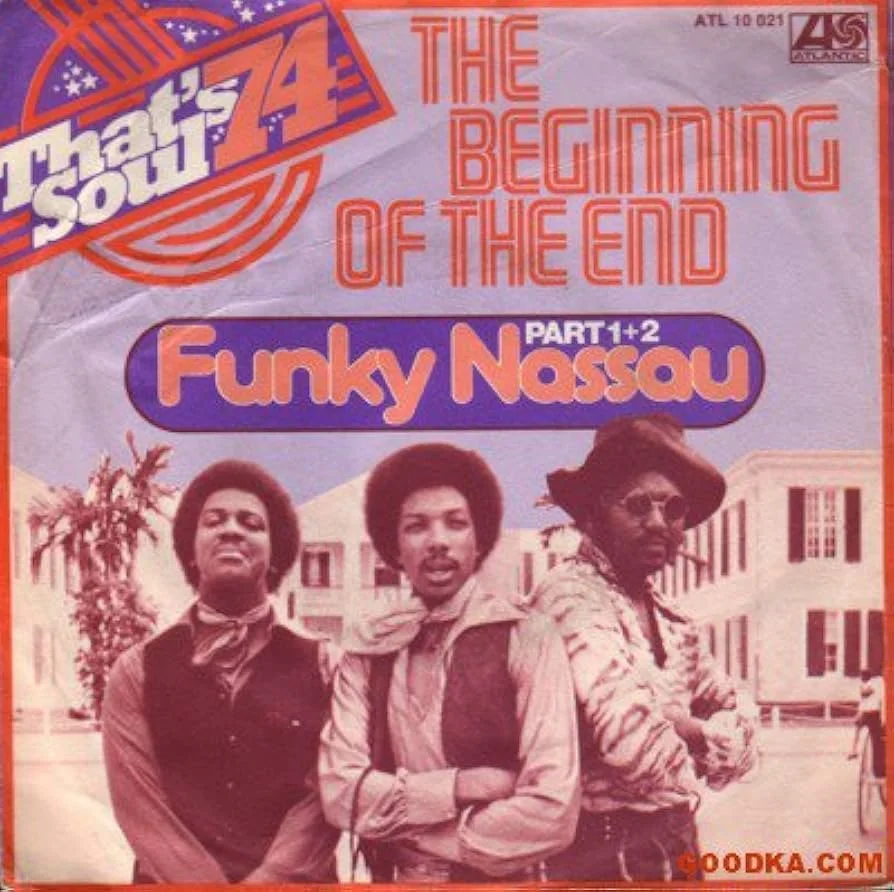
The 1970s were a transformative era for The Bahamas, marking the country's independence from British rule in 1973. This newfound sovereignty brought a wave of national pride and cultural expression, which reflected vividly in the music of the time. The decade saw a fusion of various musical genres, including funk, disco, pop and calypso
Everything Bahamian’s top 5 from 1970-1979
T connection - Paradise
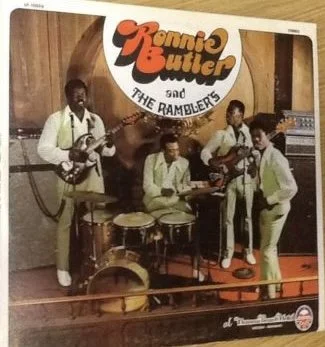
Ronnie and the Ramblers -Bahama Rock
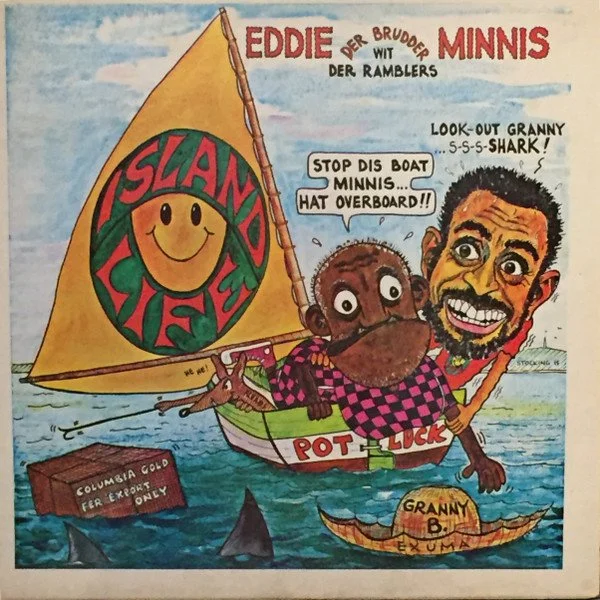
Exuma- Exuma, The Obeah Man
Beginning of the end -Funky Nassau
Biosis now-Independent Bahamas
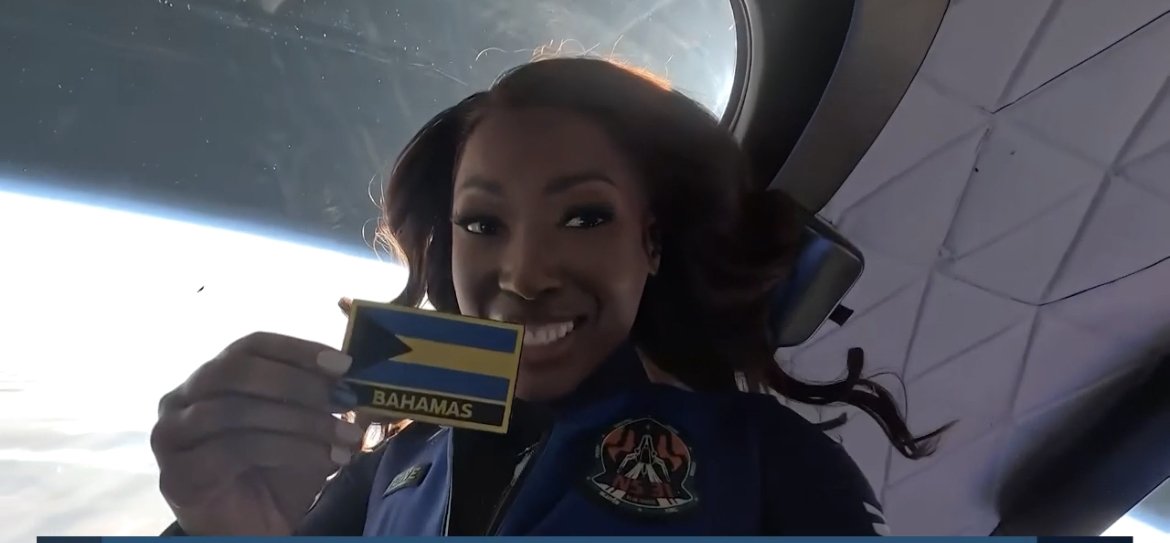
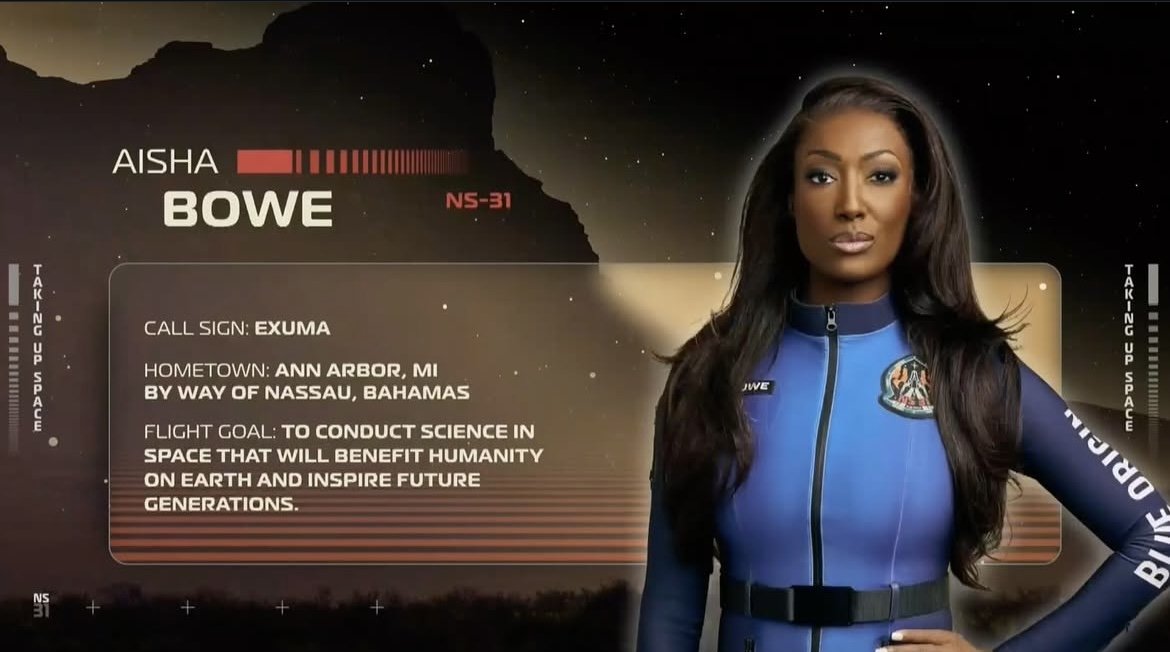
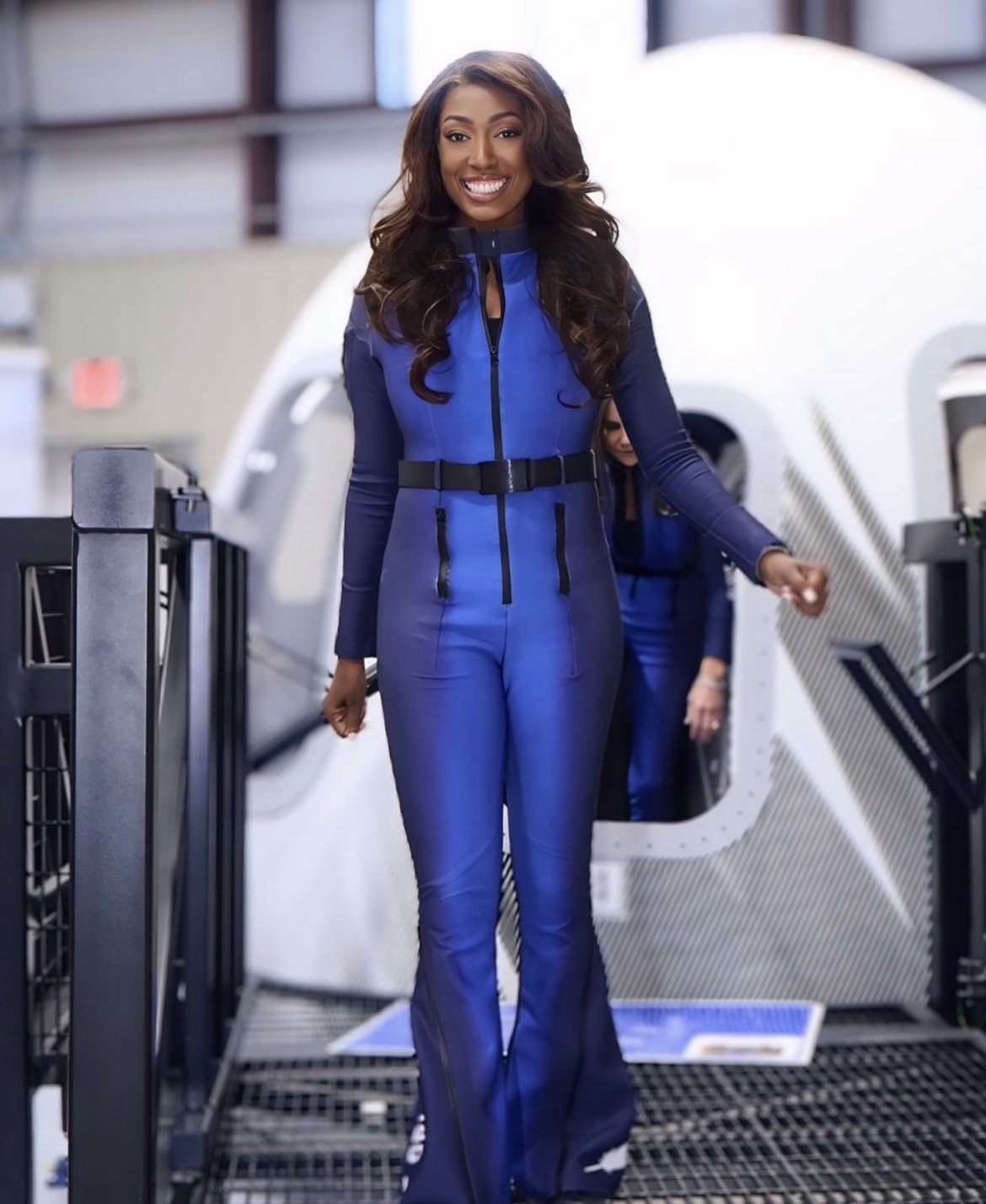
Congratulations to Aisha Bowe on her role in the successful launch of the Blue Origin New Shepard Rocket!
Aisha Bowe is a former NASA rocket scientist, an entrepreneur, and a global advocate for STEM. Today, Aisha made history as the first person of Bahamian descent to visit space. This historic journey not only serves as a highlight to her personal accomplishments but also serves as a beacon of pride for The Bahamas. With her call name "Exuma," she carried the Bahamian flag into space reminding the world that Bahamians can achieve greatness in any field.
The Bermuda Triangle has long intrigued and mystified scientists and enthusiasts with its reputation for mysterious disappearances and supernatural theories. This infamous region, despite its name, encompasses a significant portion of The Bahamas and has been the subject of speculation and controversy for over a century.

Photo credit- Pinterest
Among the areas that have become intertwined in its lore is The Bahamas, particularly the region of Bimini. This area has garnered attention due to its mysterious connections with the Bermuda Triangle and the numerous theories that have emerged from this association.
Bimini Road
Bimini Road is a fascinating underwater stone formation located near North Bimini. This formation consists of a series of stones that stretch approximately 1,500 feet in a straight alignment. It is believed that this was part of a road system of the Lost City of Atlantis. Most scientists dismiss Bimini Road as a natural geological formation but Bermuda Triangle conspiracy theorists believe that Bimini is the location of a energy vortex. In John Bell's article “The Bimini Vortex: Snorkeling Adventure at the End of the World” Bell states that in Bimini exists a “mysterious vortex where sometimes electronics fail, compasses spin and dolphins seem extra-friendly.”
The SS Sapona and Flight 19
The SS Sapona has also been tied into Bermuda Triangle theories. The Sapona has lived many lives from originally being built as a cargo steamer to being sold, stripped of its engine, and then towed to Bimini to be used as a floating warehouse for rum and whisky during Prohibition. In 1926 the Sapona ran aground on a reef in Bimini but that wasn’t the end of her story, during the Second World War the wreckage was used for target practice by the Air Force and Navy. On December 5th, 1945 after a bombing run a squadron of five Avenger bombers including 14 Naval Aviators disappeared after a practice bombing, never to be seen again.13 crew members of the Martin PBM Mariner launched a search for the squadron but they also went missing.

Photo credit Naval Air Station Fort Lauderdale Museum
According to the U.S. Naval Institutes, one of the pilots sent a radio message stating “ I don’t know where we are. We must have gotten lost after that last turn.” On the same recording, Lieutenant Taylor can be heard saying, “Both my compasses are out, and I am trying to find Fort Lauderdale, Florida. I am over land, but it’s broken. I am sure I'm in the Keys, but I don’t know how far down and I don’t know how to get to Fort Lauderdale.”
It is a bit odd that while flying over what may have likely been Bimini a trained Pilot with the Air Force and Navy, coupled with thousands of hours of flight time under his belt got lost and couldn't find Fort Lauderdale, a place they flew out of many times.
This leads me to my next point of alleged “time jumping” experiences in The Bahamas.
“Time Jump” conspiracies
Pilots flying over The Bahamas have recounted experiences during flying that mimic “time jumping” or time traveling. It has been suggested that there are areas in The Bahamas that are electromagnetic hotspots with portals capable of manipulating time.
In 1970 Pilot Bruce Gernon flew through the heart of what he believes to be a time tunnel vortex and survived. In the video shared he recreates his flight and recants the story of flying from Andros into Miami. After taking off from Andros, Gernon flew through a “cloud tunnel” with intense lightning. After re-emerging through the tunnel he received a radio from the radar controller stating that he was directly over Miami Beach which meant he traveled 100 miles in 3 minutes. Something his small plane was incapable of. The passenger's watches were also set back 20 minutes once they landed. Gernon believed he saw the fabric of time during his flight over The Bahamas.
Although there are many theories of supernatural causes for these disappearances, Time jumps and paranormal occurrences scientists still believe that geophysical and environmental factors are most likely responsible for what most would deem the impossible.
Video Credits - History Network’s Ancient Aliens episode “Earth’s Black Holes”
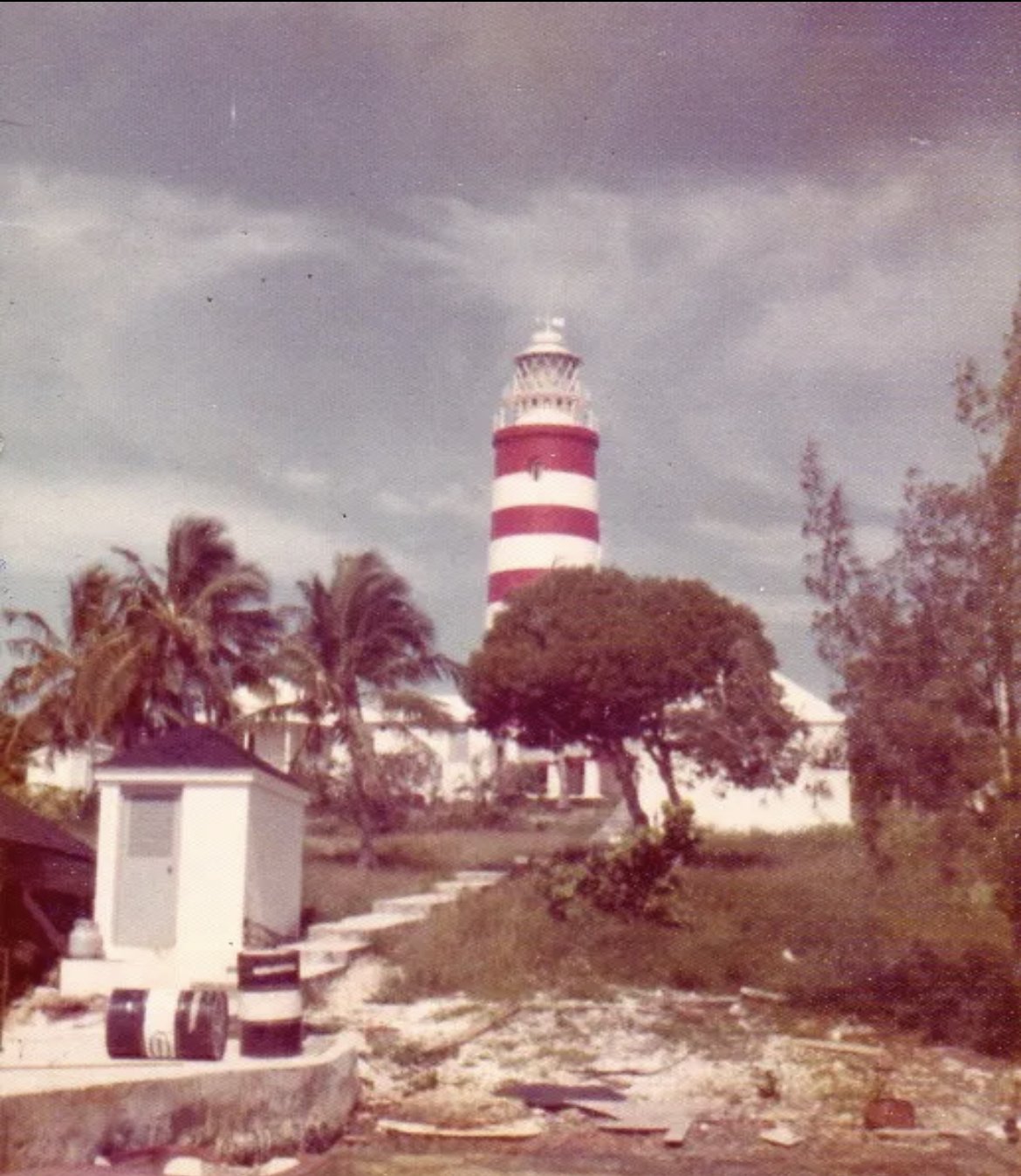
The Elbow Reef Lighthouse
The Elbow Reef Lightstation in Hope Town, Abaco is the last manual, kerosene-fueled, intact, and complete light station in the world.
Abaconians were opposed to the lighthouse project in the 1860s, they saw the lighthouse as a threat to their shipwrecking trade. Wreckers went as far as to sink a barge being used to transport the building materials.
Despite originally being against the candy-striped lighthouse the Elbow Reef Lighthouse has become a loved and treasured landmark for the people of Abaco.
Drone work: Deanya Knowles
Photo credit: Fred Albury and the AbacoSun
The Glass Window Bridge
-at just 30 feet wide The Glass Window Bridge is dubbed the “narrowest place on earth”
- the bridge got its name because they could see through the natural limestone arch to the Atlantic on the other side.
A painting of The Glass Window Bridge done by Winslow Homer in 1885 captures the natural stone arch that this Eleutheran wonder once possessed
-The Glass Window Bridge is one of the few places you can see the beautiful contrast of the deep blue Atlantic Ocean and the light blue hues of The shallows in The Bahamas
The Nassau Public Library
1 The Nassau Public Library was originally a jail or a “gaol” The old jail cells now house books, documents, and historical Arawak artifacts.
2 This library is the first building to be constructed in Parliament Square, it was constructed as a jail in 1797 and then repurposed into a library in 1879.
3 It is the largest and oldest library in The Bahamas
4 The library has a unique octagon shape, which makes it the only octagonal historic building in The Bahamas.

Eleuthera’s intertwined history with Harvard University began after the Eleutheran Adventurers encountered a storm on their journey for religious freedom and ironically ran aground The Devil’s Backbone reef. Could this be where Bahamian's instinct to blame the devil originated from? But on a serious note, this shipwreck left them entirely destitute, they were lucky enough to find shelter in Preacher’s Cave but lost most of their provisions after the shipwreck.
In 1648 the leader of the adventurers, William Sayle took a boat with eight men up to Virginia where they received supplies to revive the failing colony. By 1650 The Puritans of New England raised 700 pounds to be sent to Eleuthera, this 700 pounds would have a purchasing power of about 75,000 pounds in today's money. Filled with gratitude The Eleutheran Adventurers wielded their axes and sent the ship back to Boston filled with 10 tons of Brasilleto wood, accompanied with a note. According to Harvard in the Seventeenth Century written by Samuel Eliot Morrison, the note included “several pages of pious ejaculations, biblical references, expressions of gratitude, and general sermonizing,” the book also states that the Eleutherans declared that they were sending the wood to “avoid that foule sin of ingratitude so abhorred of God, so hateful to all men.”
Harvard College sold the Brasiletto wood which is a source of red dye for £124 and used the money to expand the college grounds.
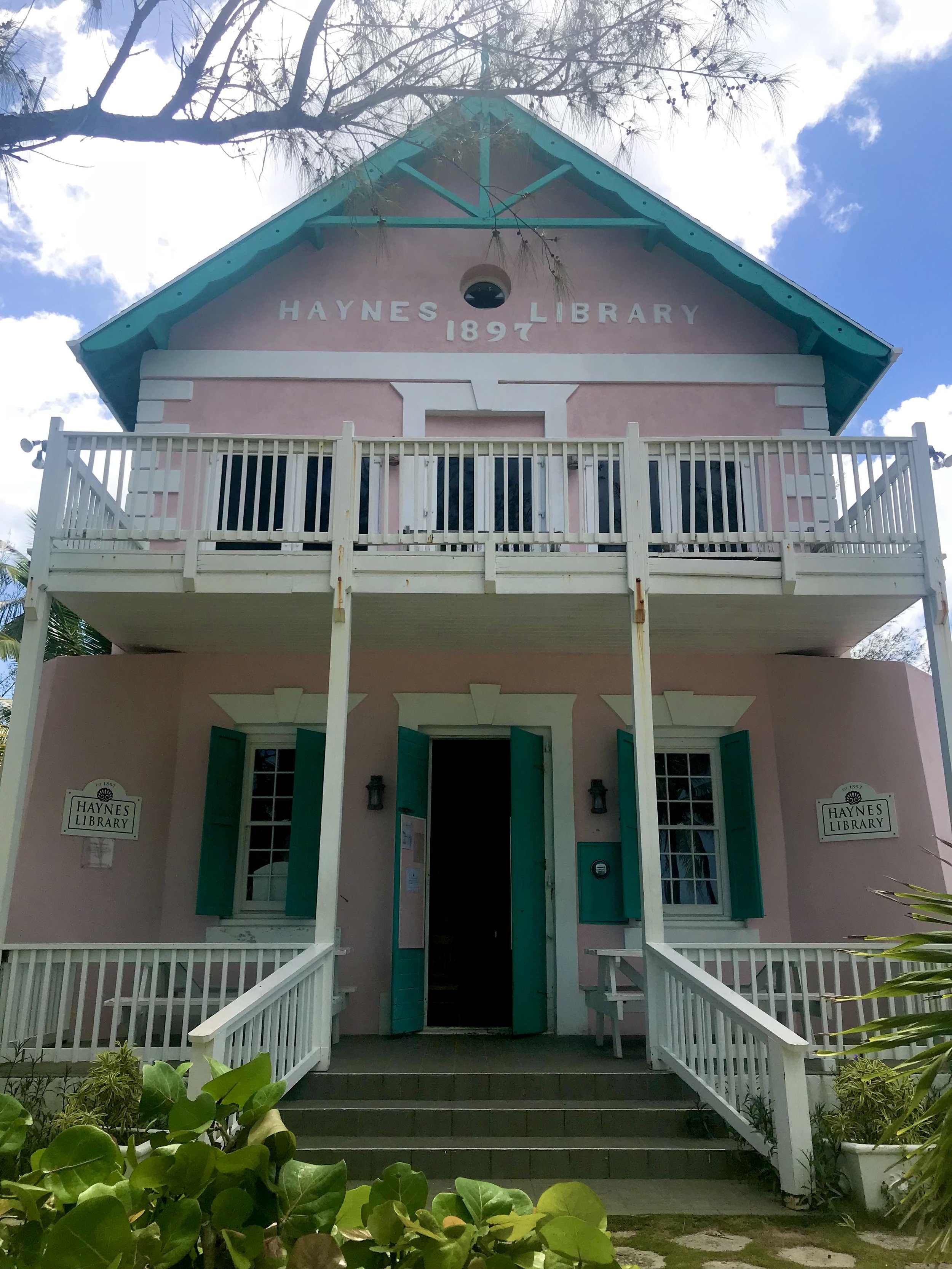
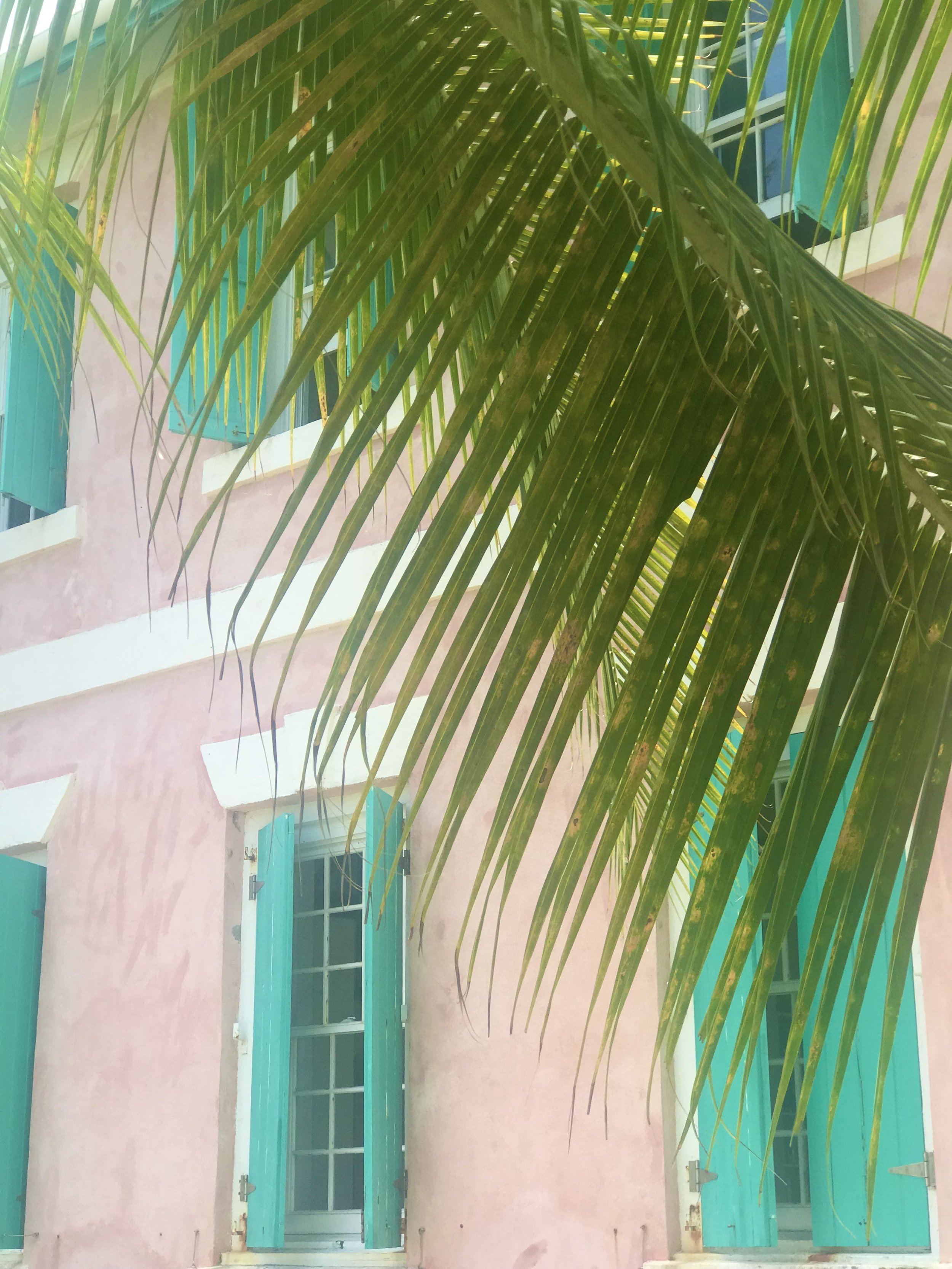
Harvard magazine reported on February 2nd, 1957, that some “Harvard Friends of Eleuthera” had just presented The Bahamas a plaque made of Brasiletto wood with a brass plate attached, commemorating the exchange of gifts almost three centuries earlier. The Plaque is located in The Haynes Library in Governors Harbour, Eleuthera.

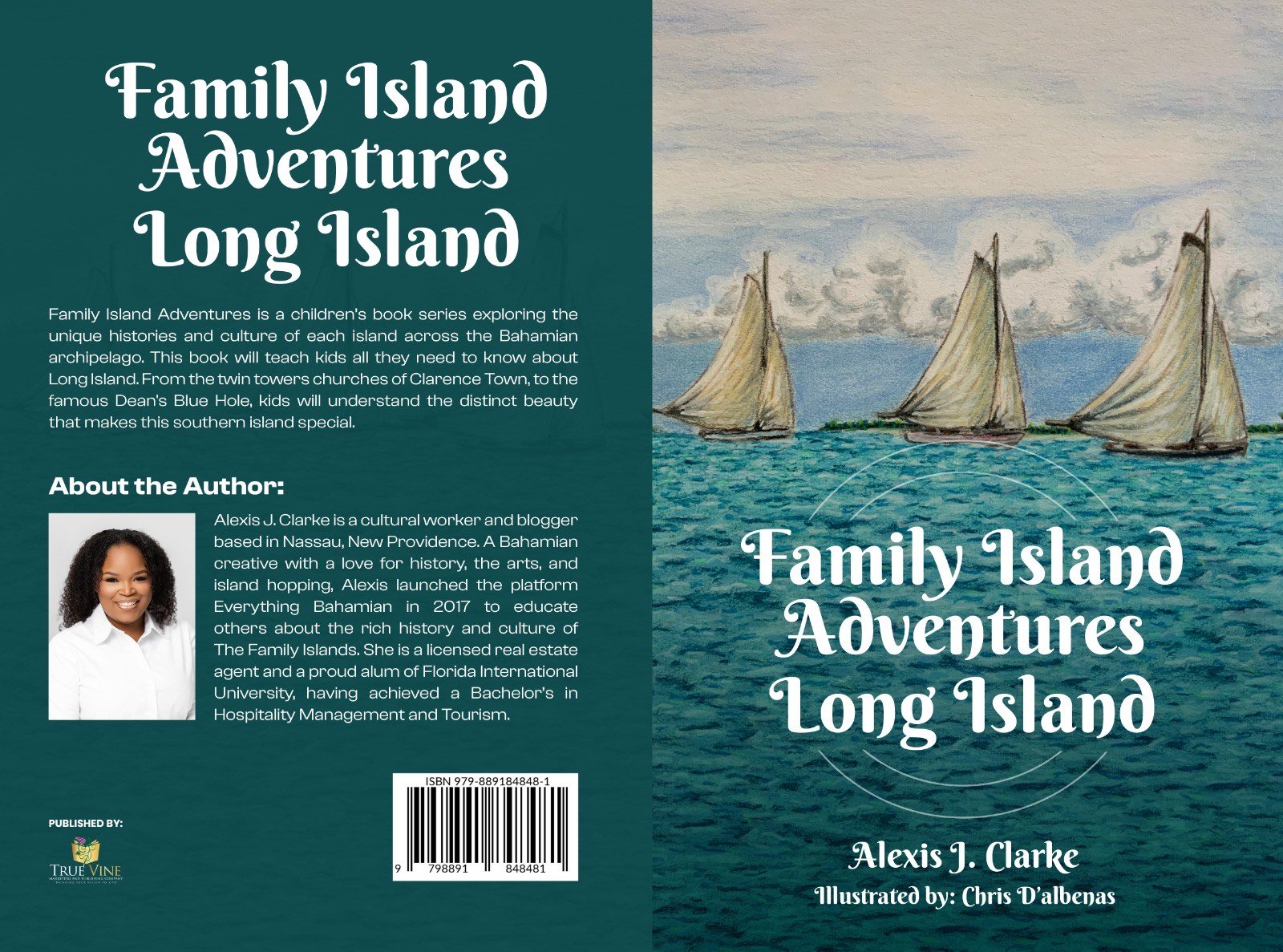
I’m so excited to announce that Family Island Adventures Long Island is now available on Amazon https://www.amazon.com/dp/B0CMDNPDVX?ref_=pe_3052080_397514860&fbclid=PAAaZ1icAex7UT2-ByxYcnOuSoyP4yAiwtro5YQwLrdtu7BTj6Mh_slIYrrTE_aem_AfRyg6W1jc87VMsosIEuZF7qLKNobRWPgNS92il_D8Sc2hDKwB6bgLpfc7NJEFluOdQ and at Another man’s treasure in the airport industrial park in Nassau.
You can also reach out to me by sending a message through the website to make an order. I’m so excited to embark on this journey of creating a Bahamian children’s book series focusing on our beautiful Family Islands!
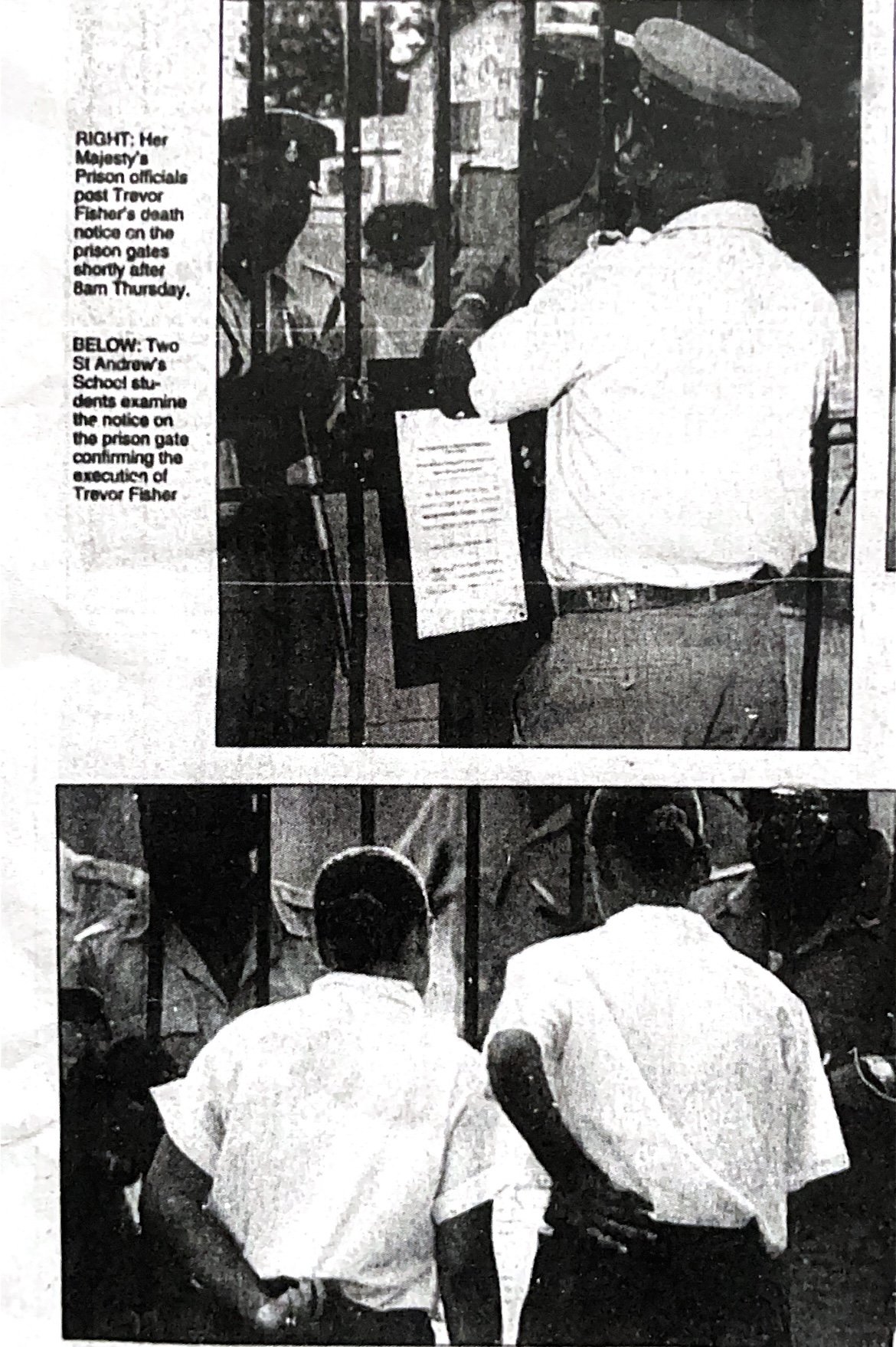
On April 10th, 1993 as the community of Harbour Island enjoyed their Easter weekend a loud crash and scream was heard on Dunmore Street. These were the horrific sounds of 51 year old Richard Woods hitting 32 year old Pauline Johnson his lover who was also his niece with his truck.
Pauline was walking with a male friend which may have fueled the jealousy, unfortunately, she would succumb to her injuries 5 days later, she was survived by her husband and 3 children. As a result, Richard Woods was sentenced to death in January 1995.
Richard Woods’ day of execution would be shared with Trevor Fisher who was also convicted of murder. October 16th, 1998 proved that most Bahamians and international human rights organizations feel very differently regarding executions.
As the Inter-American Commission on Human Rights petitioned to save their lives, Bahamians turned the executions into an event. Food vendors set up shop amongst the crowd, students stopped by on their way to school and the crowd cheered as death notices were hung on the prison gates.
The last execution in The Bahamas would be on January 6th,2000, to read more on that check out my previous Halloween story about John Higgs
https://www.everythingbahamian.com/blog-1/5krje67nbnwsm30qdim4b03kmyuown


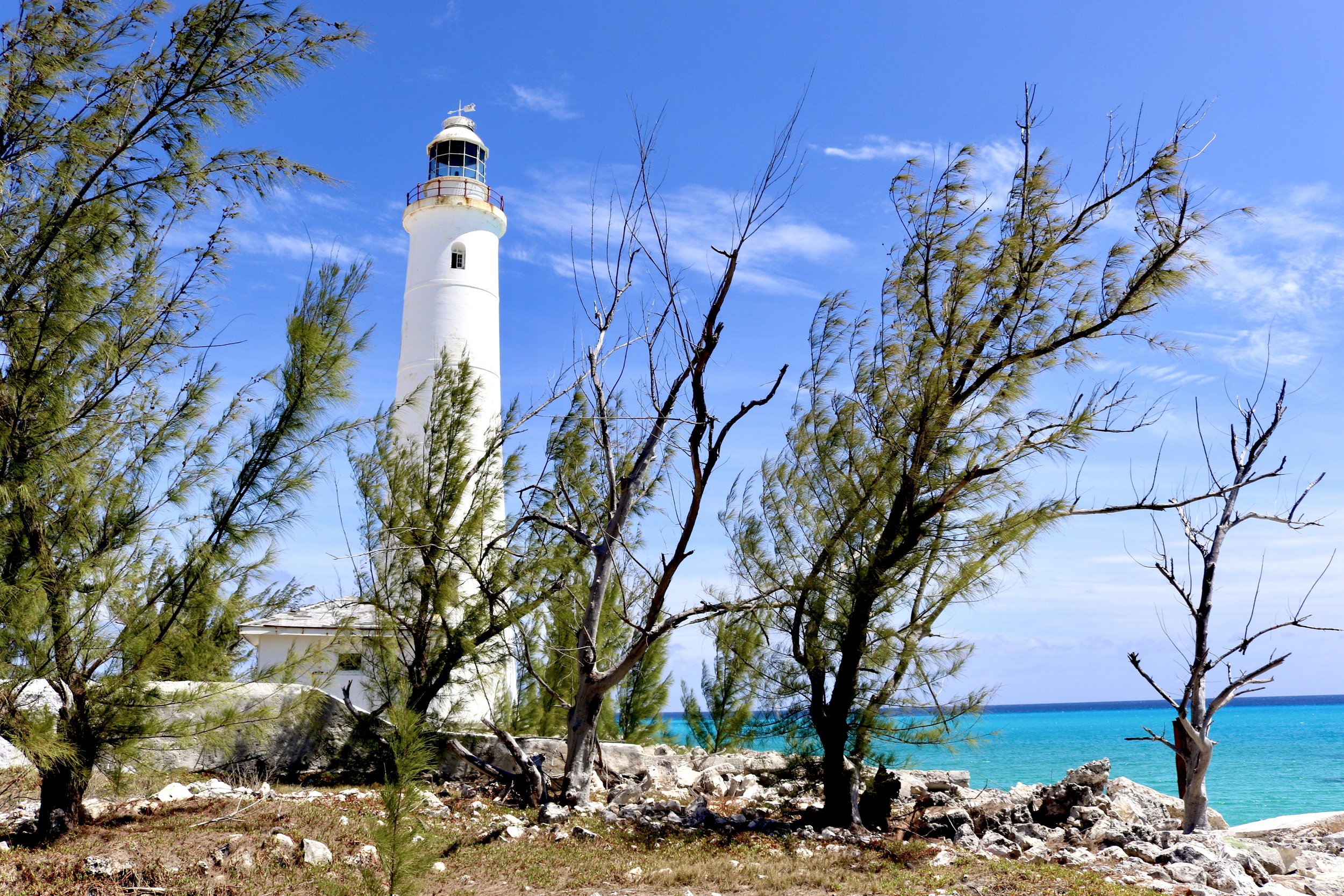
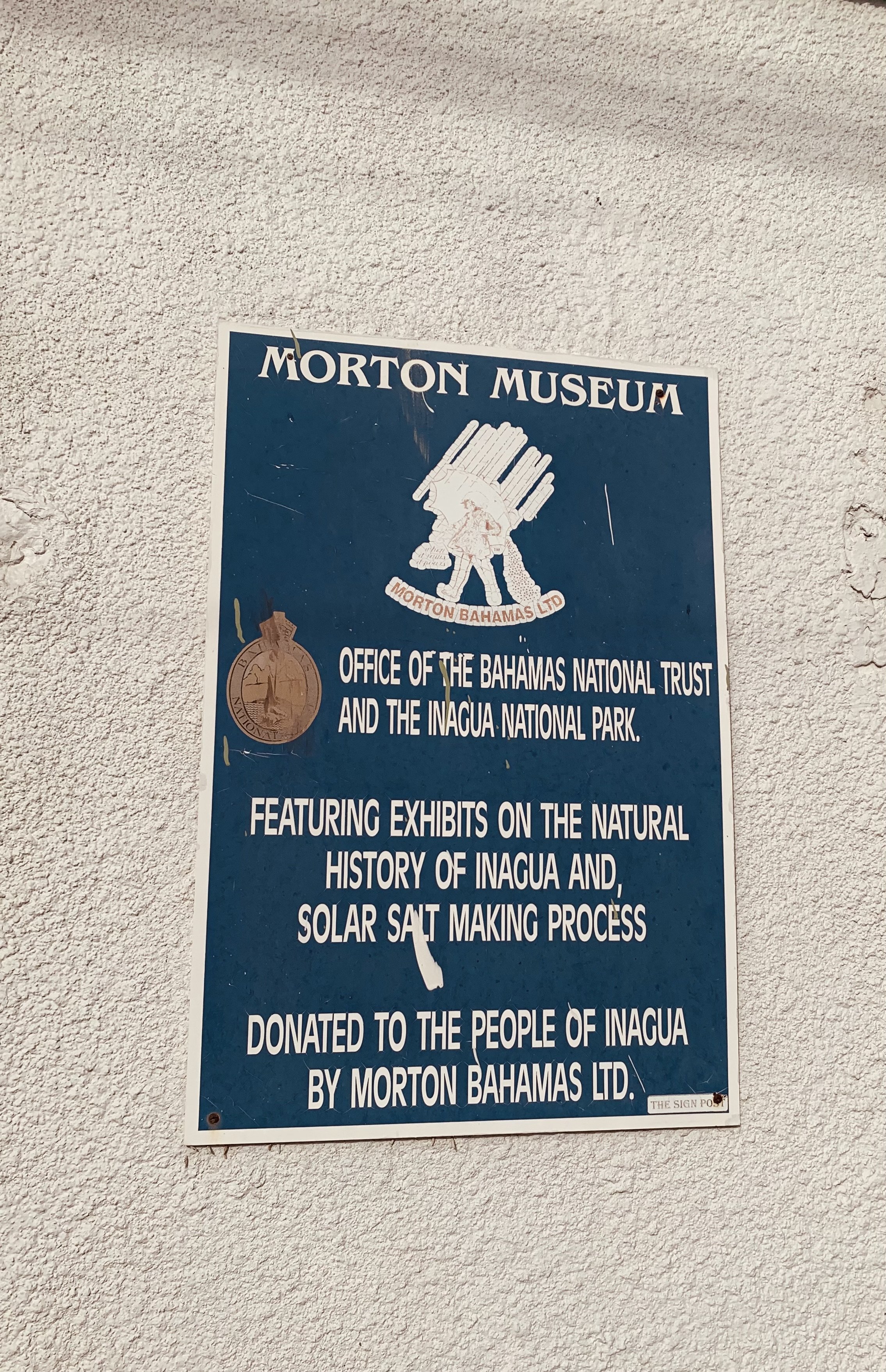
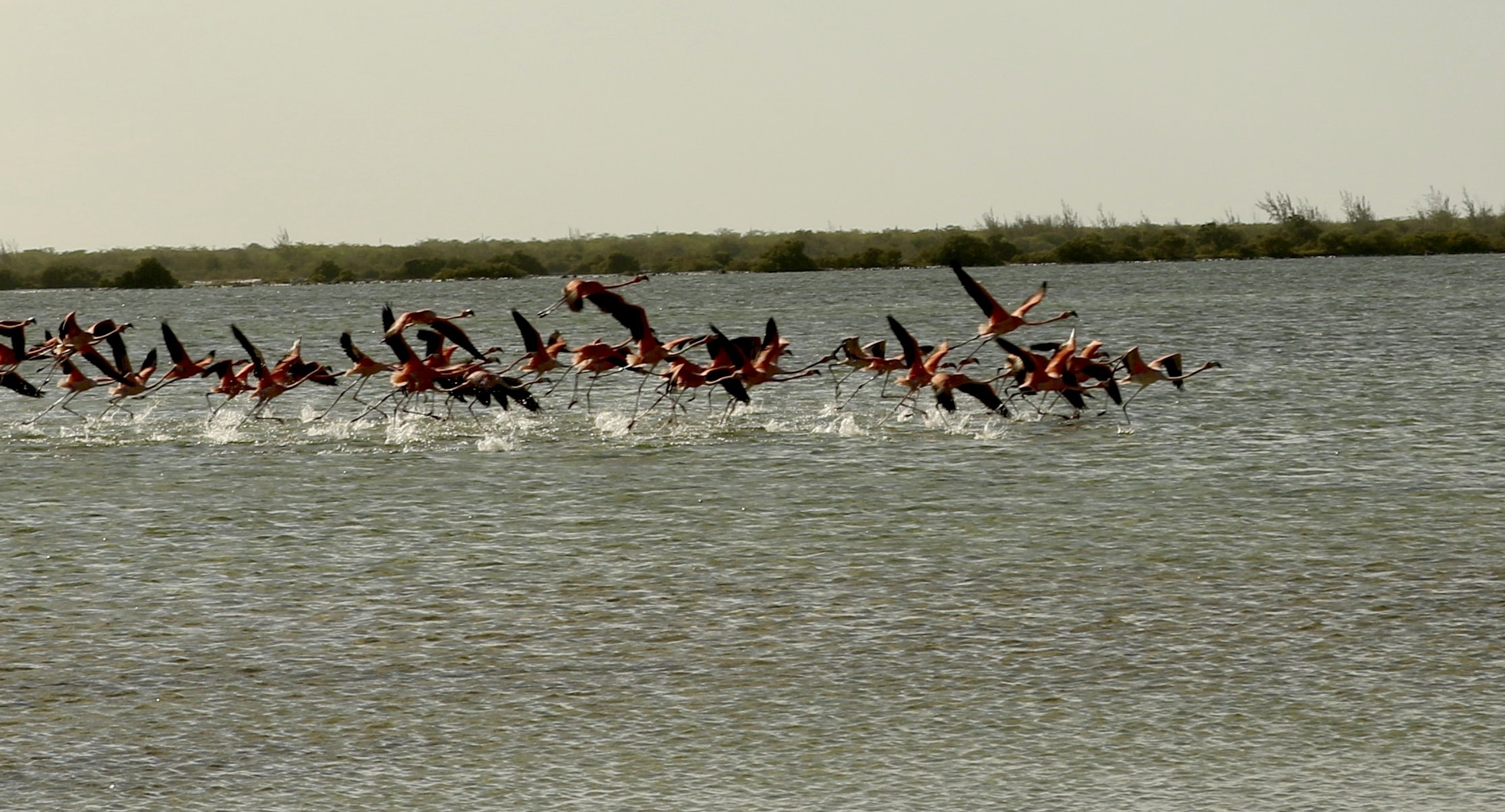
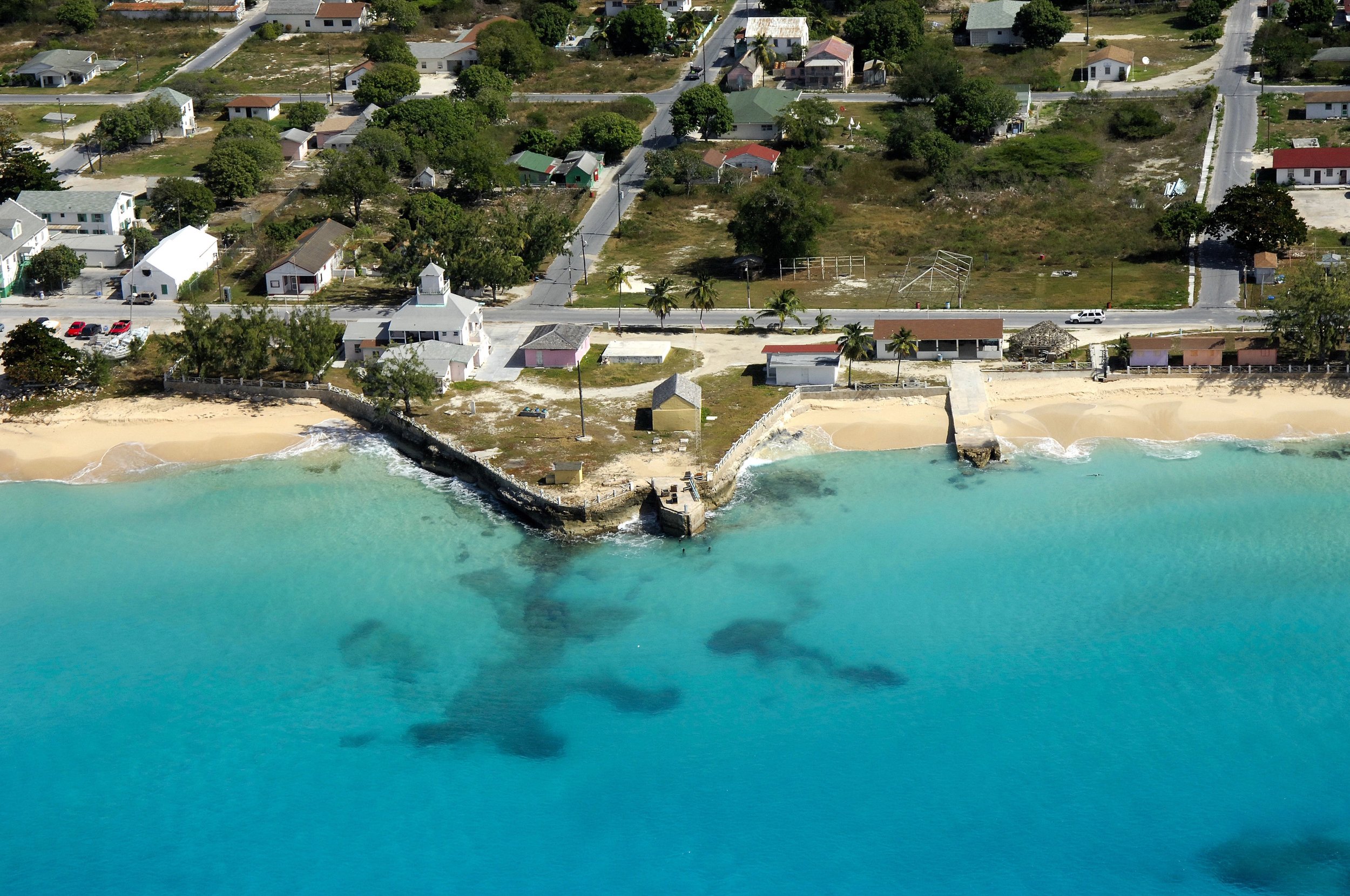
Some of my favourite photos I’ve captured in Inagua. (Credit for aerial image goes to marina.com) Inagua is more than just the bird-watching capital of The Bahamas. Inagua also has a fascinating history. Matthew town is the only settlement and is said to be the best laid out town in The Bahamas. With its perfectly planned squares (see aerial photo) within the settlement it’s easy to get lost 😂.
Inagua was also once the port of call for many international vessels, the island was so prosperous that in 1900 a proposal was made to the House of Assembly for Inagua to become a part of Jamaica. The HOA knew the financial loss would be too great for The Bahamas and the suggestion was refused.
With one of the world's largest solar evaporation saltworks and the second-largest saline operation in North America located on the island, it makes Inagua an unassuming industrial powerhouse