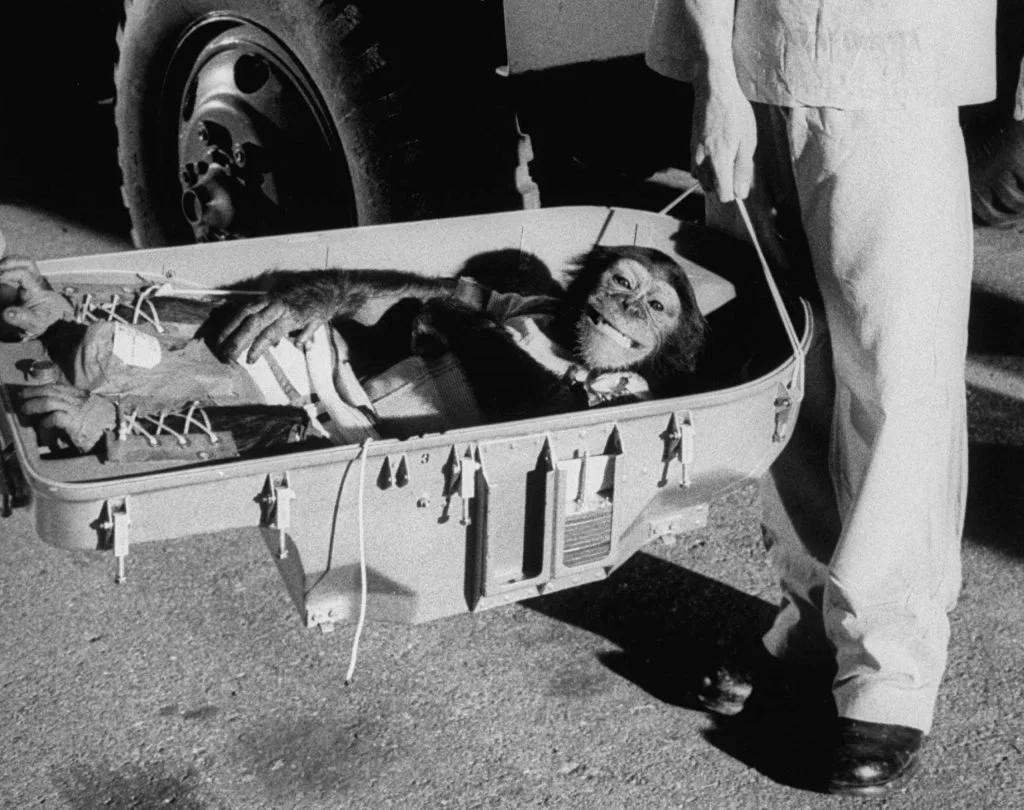
Ham, the Astro chimp, and his unexpected visit to The Bahamas.
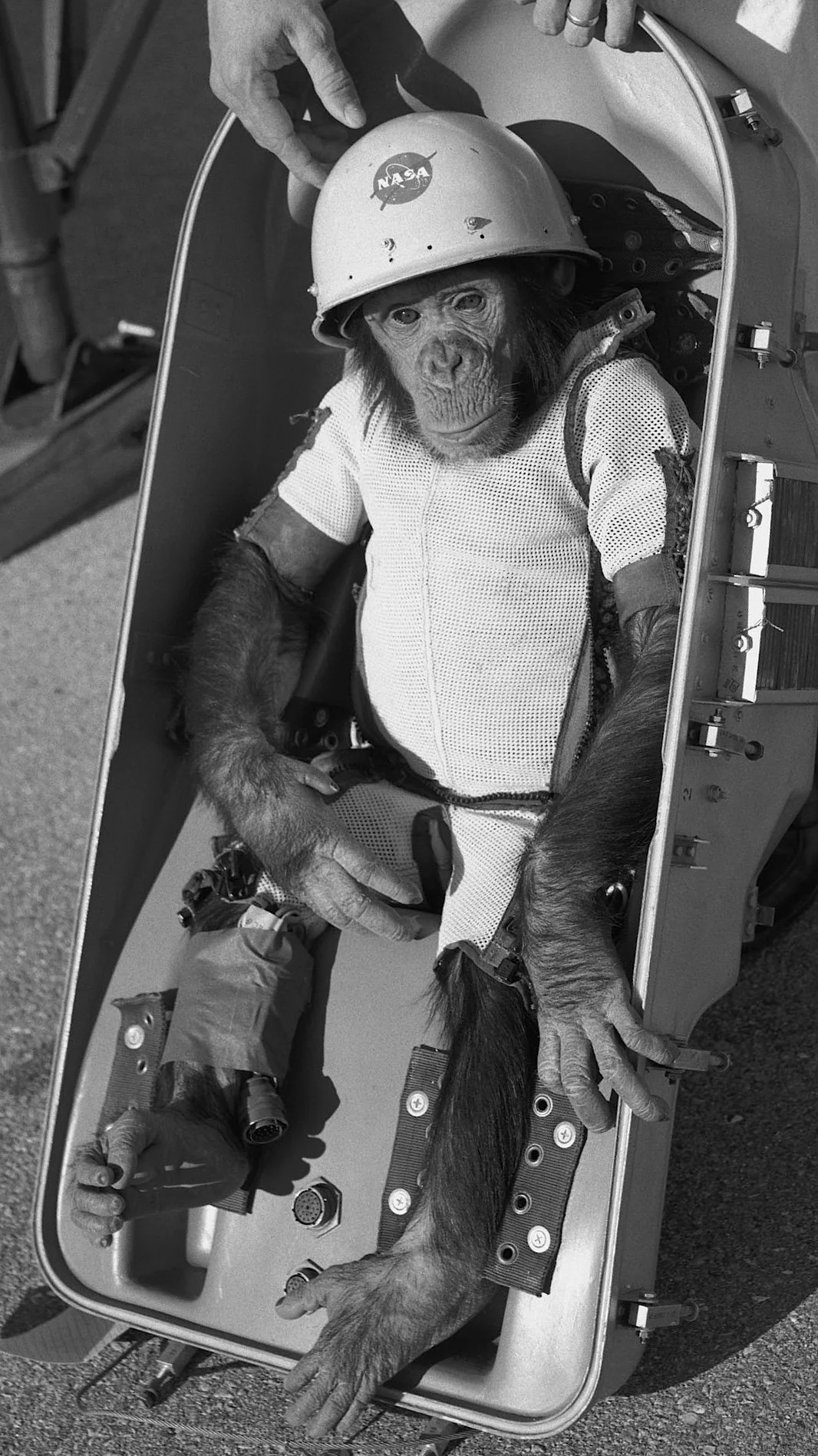
Photo credit-NASA
With recent SpaceX launches throughout The Bahamas, it’s important to note that our country has always been roped into our northern neighbor’s obsession with space and deep-sea (see AUTEC) exploration.
As early as the late 1950’s Mayaguana was used as a tracking base for the Thor-Able Missile program that tested heat shields and early space photography.
The missile was launched from Cape Canaveral, Florida and the data capsule containing the camera was recovered on February 16th 1960 on a beach in Mayaguana. This camera was the first to provide pictures of the Earth's surface from outer space
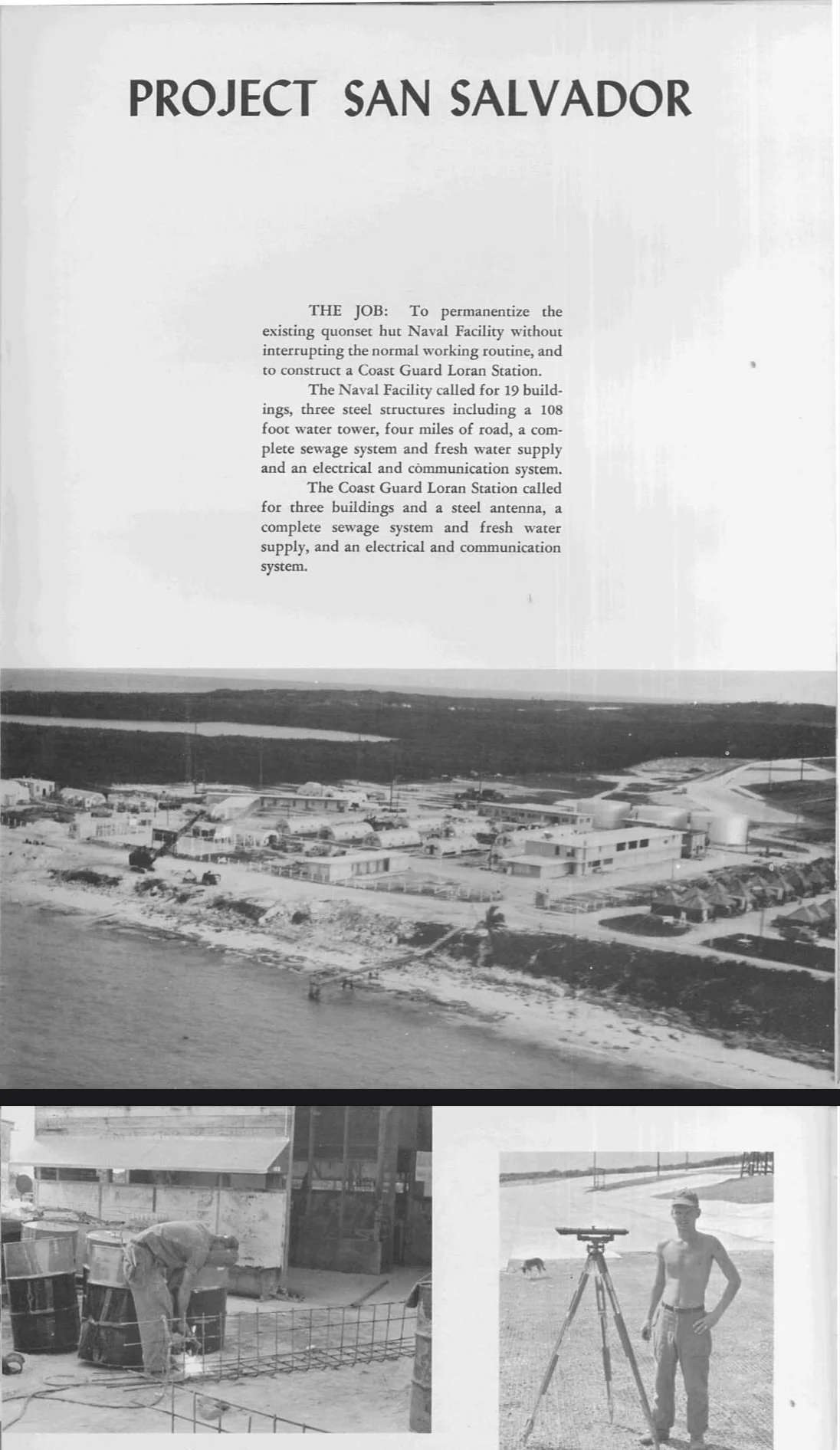
San Salvador was also used as a long-range navigation station during the early 1950’s to the late 1960’s to monitor missiles fired and to monitor submarine activity.
Below Photo retrieved from the Naval Mobile Construction Battalion document.
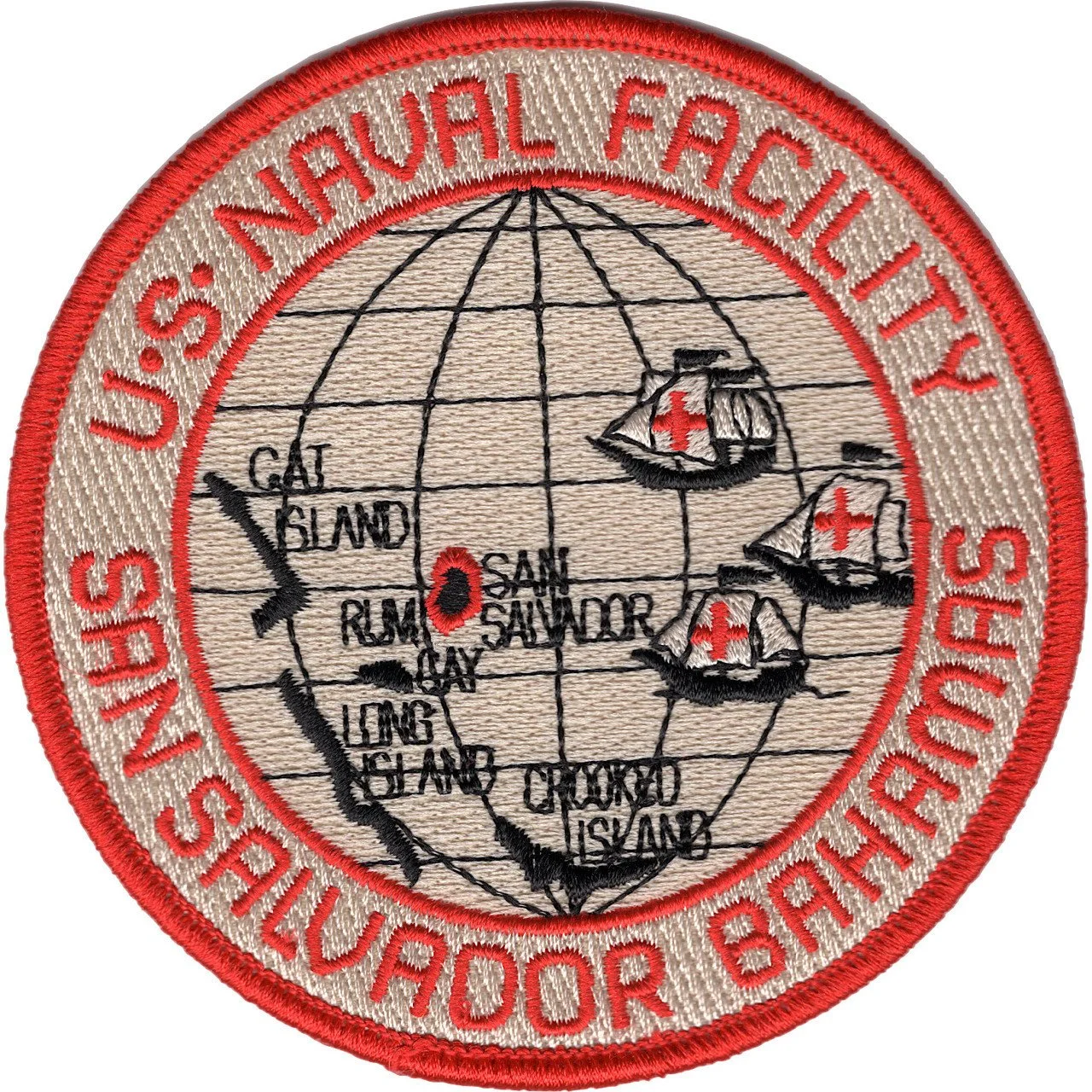
U.S Naval Facility San Salvador, The Bahamas badge.
The U.S. Navy also operated a Cold War-era base, NAVFAC Eleuthera, near Governor’s Harbour, from 1957 to 1980
According to www.grandbahamamuseum.org
During the Cold War in 1950, the U.S. was granted the right to install tracking stations for guided missiles (and later the Apollo Space missions) in The Bahamas by the British government. The missile-tracking system was designed to advance the Air Force’s understanding and development of push-button warfare.
The “down range” stations began with the Grand Bahama base, built in 1951 on a 3,500-acre site, which provided launch support from 1954 to 1987.
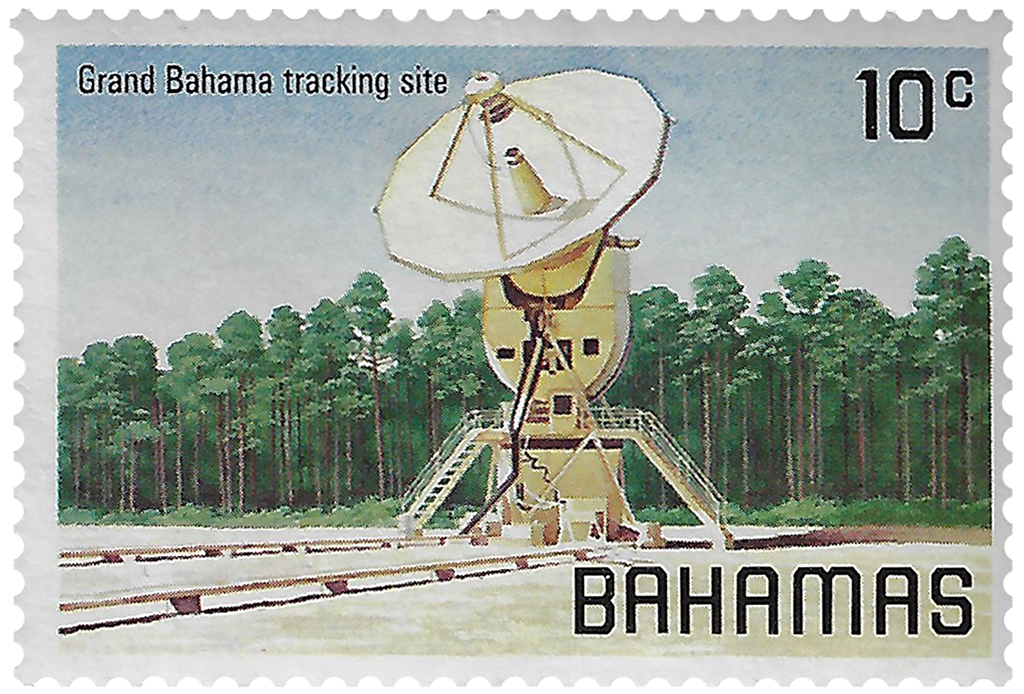
Photo credit- Grand Bahama Museum
On January 31st 1961, NASA would send the first great ape into space in an effort to test whether a living being could survive and function in space.Ham, who was originally called subject 65 underwent intense training for about 2 years before takeoff.
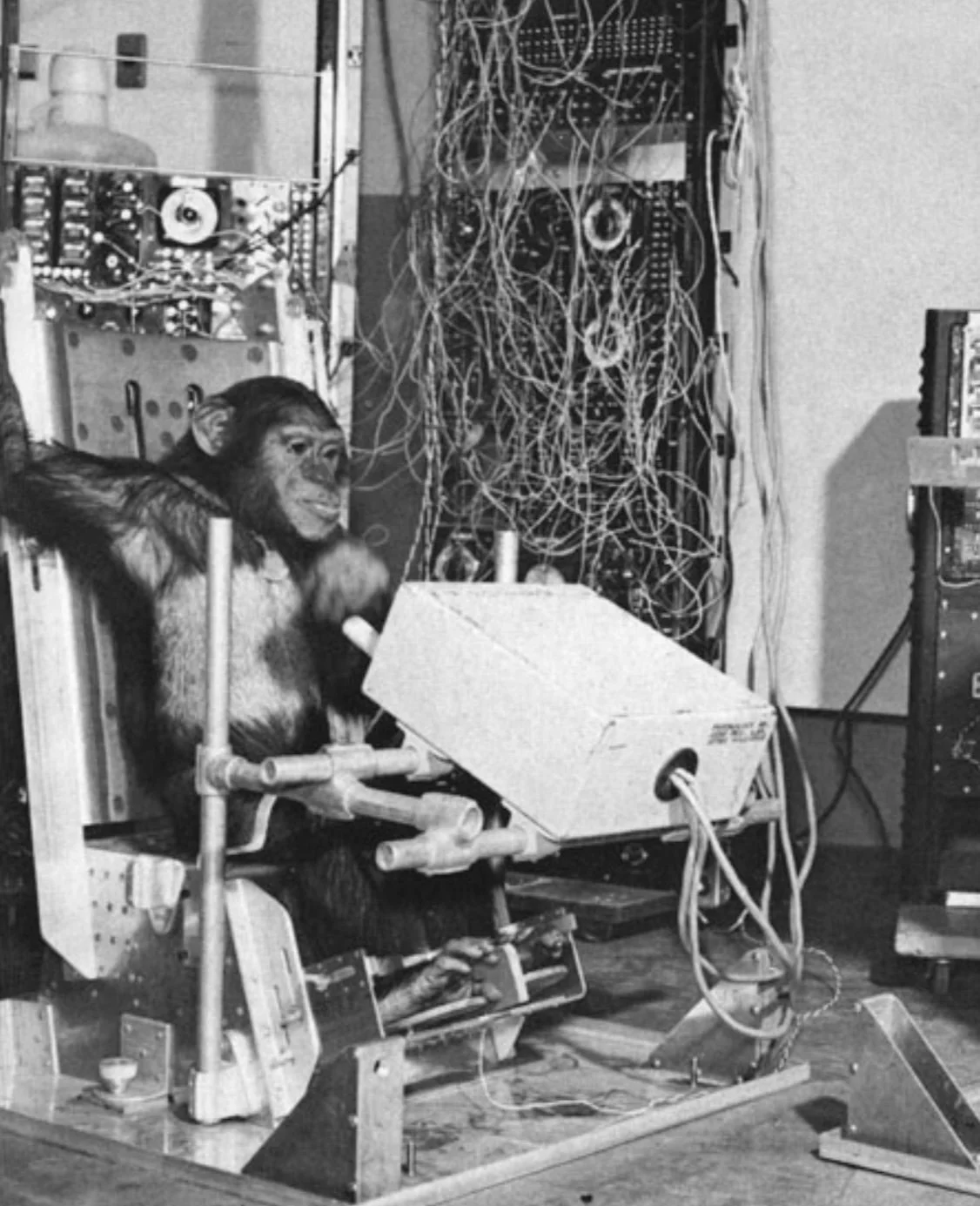
Photo credit-NASA
At 11:54 a.m. the rocket launched into space and what started as a smooth trajectory quickly began to show problems. A faulty valve began to inject too much liquid oxygen into the engine which resulted in excessive thrust that accelerated Ham faster than expected. The mission was planned to reach an altitude of 115 miles and land 290 miles downrange, the space craft actually reached an altitude of 157 miles and landed 422 miles downrange.
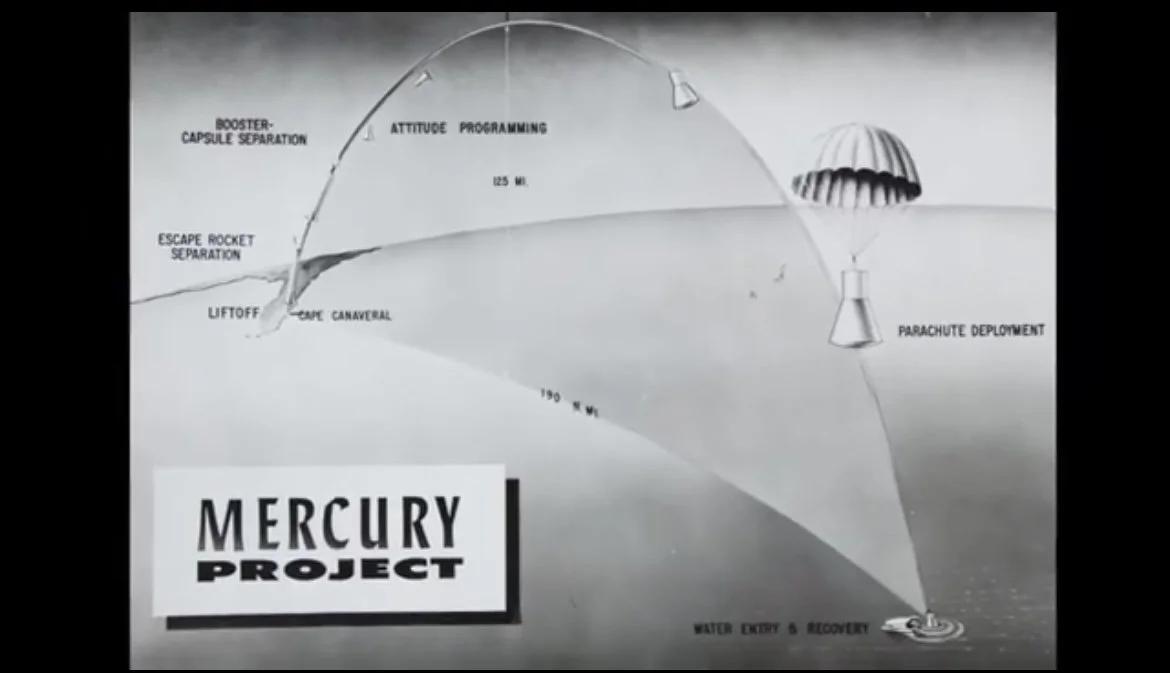
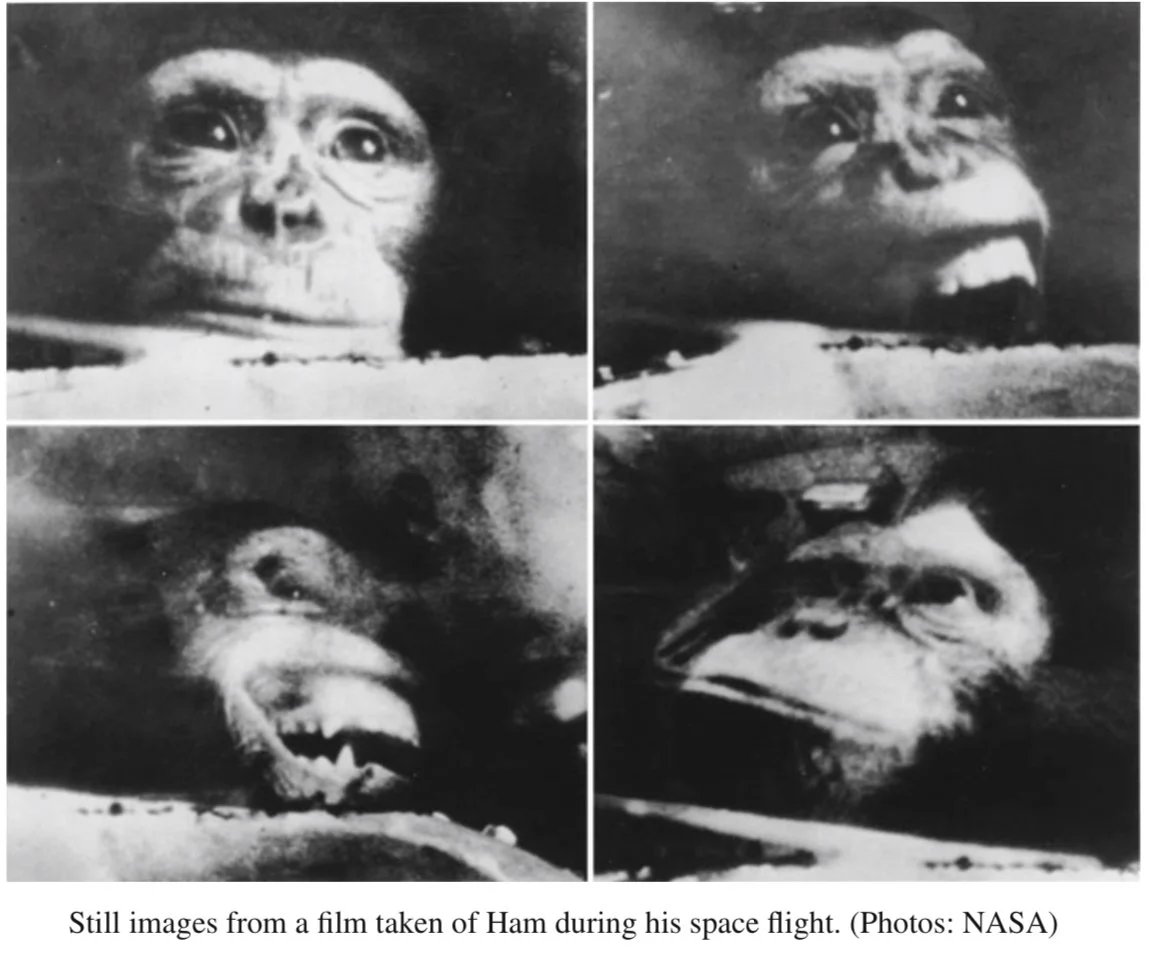
Ham’s capsule splashed down into the rough seas far beyond the end of the Atlantic missile range. Shortly after NASA reported that the floating capsule would be rescued within three hours. By 2:52 p.m. The capsule was recovered by a helicopter and quickly transported to the USS Donner at 3:38 p.m.
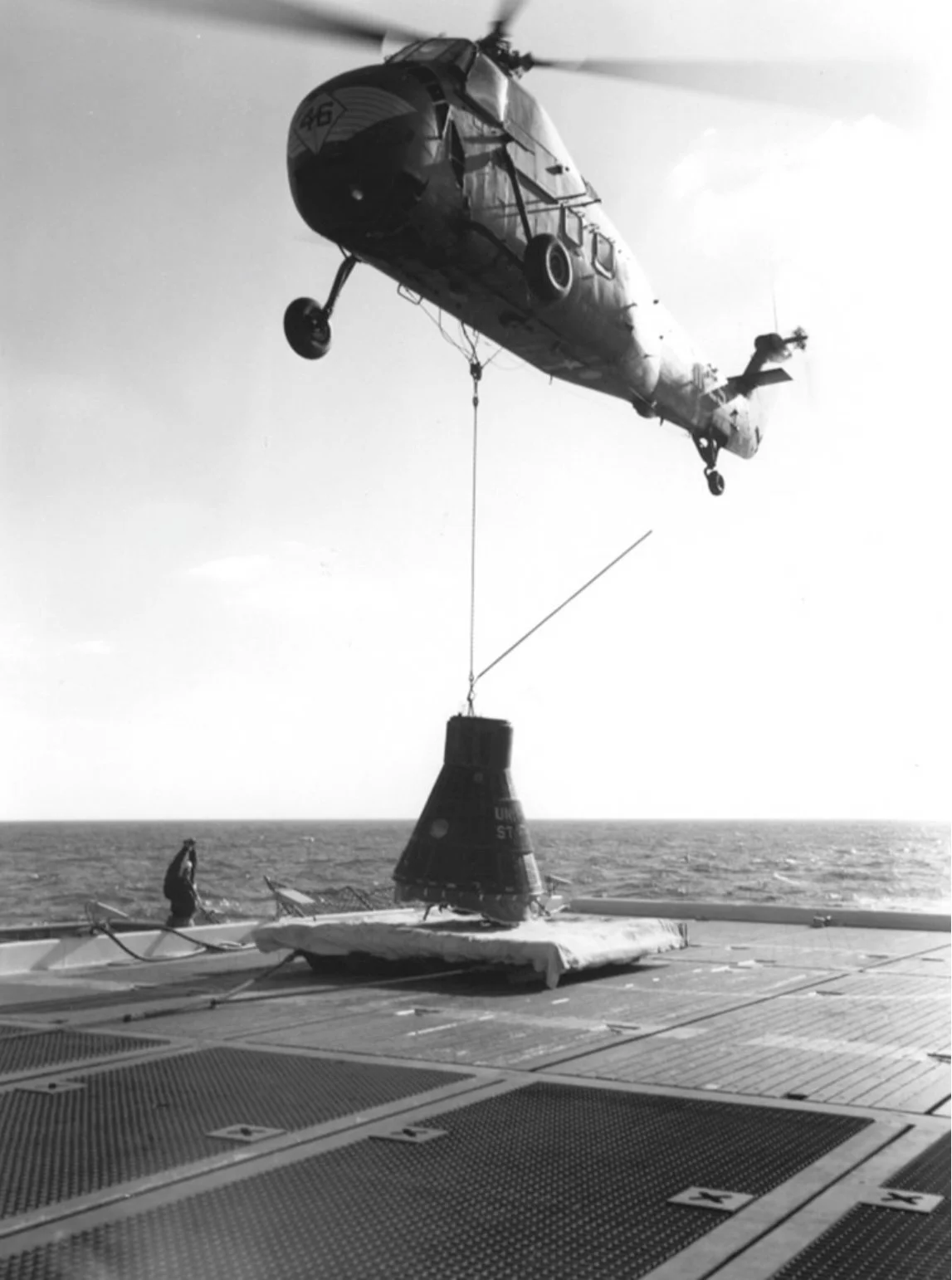
Photo credit- U.S. Navy
Unsure of what state Ham was in they finally opened the capsule…
Video retrieved from “Ham the first astro chimp” documentary
Ham became the first living being to return from space alive. According to the book “Freedom 7: The Historic Flight of Alan B. Shepard” “Later, with Benson sleeping in an adjoining stateroom, Han spent the night in the commodore's quarters as the ship steamed across a moonlight ocean for Grand Bahama Island”
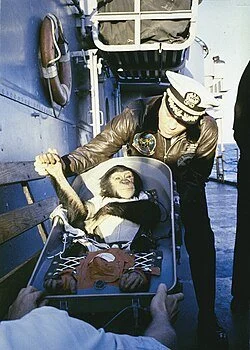
Photo credit- NASA
For further medical attention Ham was loaded back onto the helicopter and transferred to a forward medical facility on Grand Bahama.
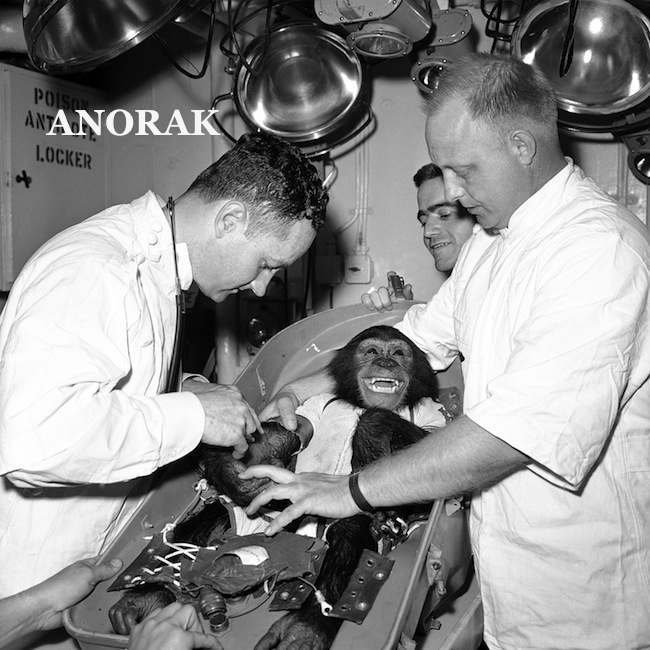
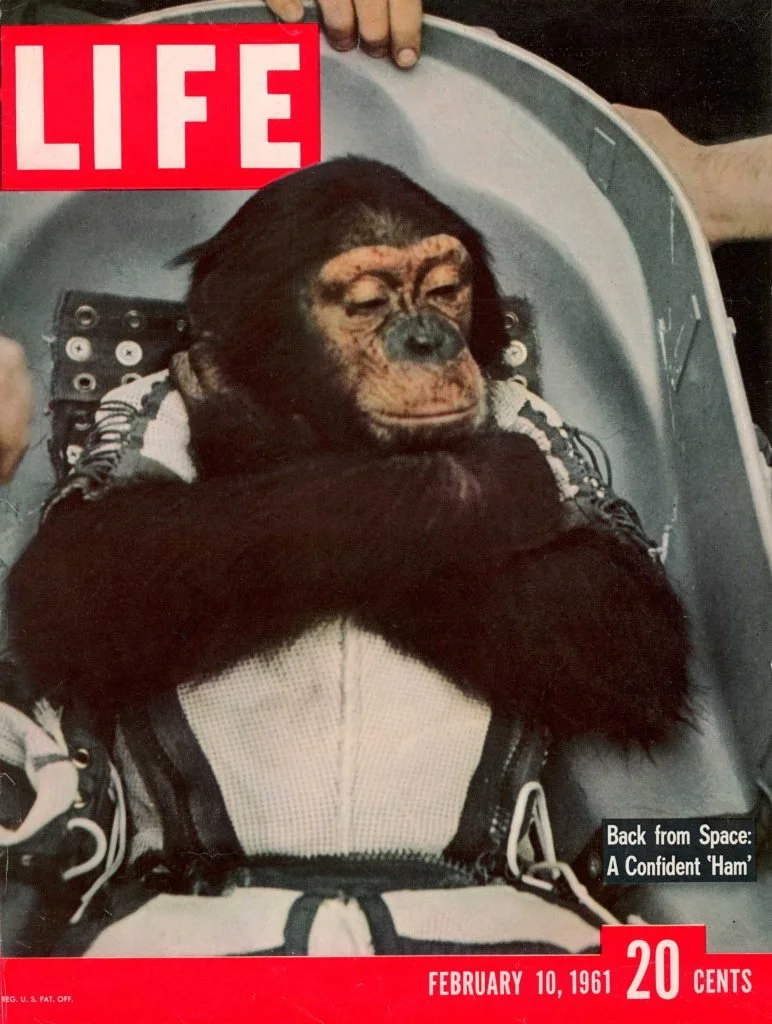
Ham was quickly thrust into the limelight being featured in magazines and newspapers
According to Dorcas Bowler in her article on the Grand Bahama East End Missile Library in 1995 “Father Grant, an Anglican priest from High Rock suggested the vacant telecommunication building on the main highway be used for a library” The vacant telecommunication building on the former missile base was transformed into a library that salutes Ham’s landing near the site
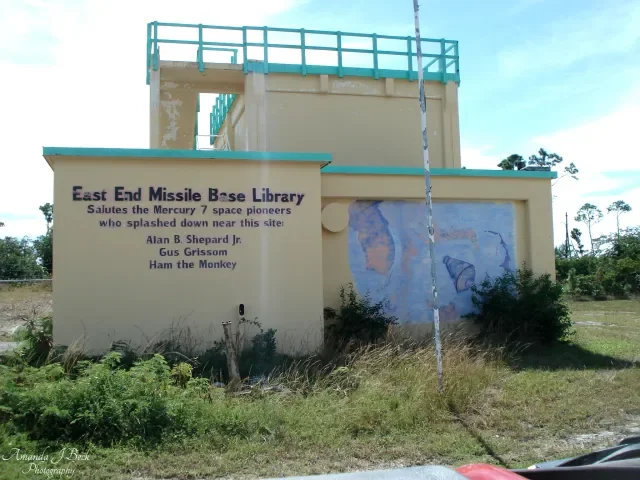
Photo credit- Amanda Beck photography
Ham became the library’s mascot, and the East End Missile Base Library would go on to annually celebrate “Ham day” Bowler states that “The first Ham Day was held at the Freetown Primary School in January 1998. One goal of the Library’s Board of Directors was to preserve the historic significance of the Missile Base and the part The Bahamas (Grand Bahama Island in particular) played in the United States space program. For this reason, the Board chose to select as its annual fund-raising celebration the anniversary of the chimpanzee ham’s flight into space.”